


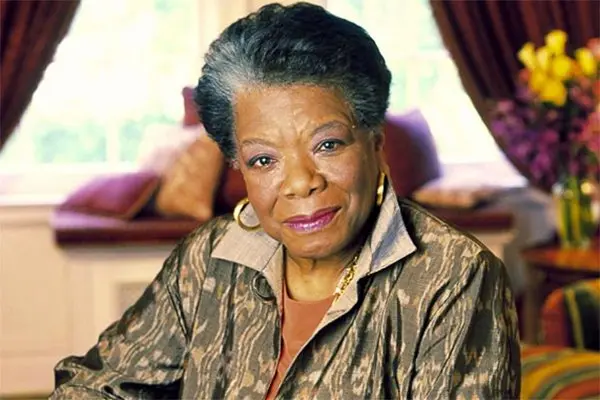
Introduction: The Renaissance Woman
Dr. Maya Angelou stands as a singular figure in American cultural history, a person whose life and work defy simple categorization. To label her merely as a writer, though she was one of the most influential of the last century, is to diminish the vast scope of her accomplishments. She was, in the truest sense, a “Renaissance Woman,” a polymath whose talents illuminated a remarkable array of fields. Over a lifetime that spanned 86 years, she was an internationally acclaimed author and poet, a professional dancer and singer, a lauded actress of stage and screen, a composer, a pioneering screenwriter and director, a tireless civil rights activist, and a beloved university professor. Her voice, both in its distinctive lyrical cadence and in the profound moral authority of her prose, became a defining sound of the 20th and 21st centuries, articulating with unparalleled grace the struggles, sorrows, and ultimate triumphs of the human spirit, particularly within the context of the African American experience.
This report argues that Maya Angelou’s life and work represent a powerful and sustained testament to the transformative power of language. Her journey demonstrates a remarkable alchemy through which she transmuted the lead of profound personal trauma and systemic oppression into the gold of a multifaceted career dedicated to resilience, identity, and social justice. More than a sequence of different careers, her life reveals a deliberate and innovative fusion of art and activism, where each creative endeavor—whether a poem, a song, a performance, or an autobiography—served a larger pedagogical and political purpose. From the silent trauma of her childhood to the global resonance of her voice, Angelou crafted a life that was itself her most compelling work of art, a narrative of phenomenal endurance and grace that continues to educate and inspire.
Part I: The Caged Bird’s Song – Formative Years (1928-1945)
The foundational experiences of Maya Angelou’s life were forged in the crucible of the Jim Crow South, a world defined by both intimate love and profound cruelty. The traumas and triumphs of this period were not merely events she survived but the very soil from which her artistic voice and enduring thematic preoccupations would grow. Her early years were a study in contrasts—of stability and dislocation, of silence and song—that would provide the raw material for her most iconic work and shape the moral and artistic compass that would guide her entire life.
Chapter 1: A Name and a Nickname: St. Louis to Stamps
Maya Angelou was born Marguerite Annie Johnson on April 4, 1928, in St. Louis, Missouri, to Bailey Johnson, a naval dietitian, and Vivian Baxter Johnson, a nurse. Her life began with an act of profound dislocation that would become a central theme in her work. When she was just three years old and her brother, Bailey Jr., was four, their parents’ “calamitous marriage” ended. In an act that epitomized the instability of their early family life, their father sent them alone by train to live with their paternal grandmother in Stamps, Arkansas. This journey, undertaken by two small children with identification tags on their wrists that read, “To Whom It May Concern,” was the first and most formative instance of the “debilitating displacement” that would characterize her childhood and echo throughout her literary explorations of home and identity. It was during this period of shared vulnerability that her brother, Bailey Jr., unable to pronounce her full name, gave her the affectionate nickname “Maya,” a derivation of “My Sister” or “Mya Sister”. This name, born of sibling love amidst abandonment, was the one she would later adopt as her own, a permanent marker of the bond that sustained her through the trials to come.
Chapter 2: The World of Stamps: Piety and Prejudice
In Stamps, the Johnson children found a world of stability and order under the care of their paternal grandmother, Annie Henderson, a figure of immense strength whom Maya called “Momma”. Momma Henderson was a pillar of the Black community, a pious and shrewd entrepreneur who owned the Wm. Johnson General Merchandise Store, the only such establishment in the town’s Black section. In an “astonishing exception” to the harsh economic realities faced by African Americans during the Great Depression, she prospered financially through “wise and honest investments,” providing her grandchildren with a level of economic privilege and security that was rare for the time and place. Life in her home was governed by the “strict Christian values common in the rural South,” an upbringing that instilled in Angelou a deep-seated faith and a strong sense of fair play.
This haven of familial love and economic stability, however, was situated within the oppressive social structure of the Jim Crow South. Stamps was a “quintessential southern lumber town,” and its social fabric was rigidly segregated. From a young age, Angelou experienced the daily indignities of racial prejudice and discrimination, from the condescending attitudes of white customers in her grandmother’s store to the starkly limited opportunities available to Black high school graduates. This environment was a constant “tripartite crossfire of racism, sexism, and power” that profoundly shaped her understanding of the world. Her relationship with Arkansas would remain a “conflicted love affair” for the rest of her life—a place that was simultaneously the incubator of her voice and the source of her most painful memories.
Chapter 3: A Voice Silenced and Found
The most formative and devastating trauma of Angelou’s childhood occurred when she was seven or eight years old. Her father arrived in Stamps unexpectedly and returned the children to the care of their mother, Vivian Baxter, in St. Louis. During this period, Angelou was sexually abused and raped by her mother’s live-in boyfriend, a man named Freeman. After she confided in her brother, who in turn told the family, Freeman was arrested and convicted but released after only a day in jail. Shortly thereafter, he was found beaten to death, an act of vengeance widely believed to have been carried out by her uncles.
The sequence of events plunged the young girl into a state of profound psychological crisis. Believing that her words had caused the man’s death—”I thought I would never speak again, because my voice would kill anyone”—she chose to become a virtual mute upon her return to Stamps. This period of elective mutism lasted for approximately five years, a silent exile that would paradoxically become the crucible of her artistic identity. The trauma that stole her voice did not create a void; rather, it forced a profound inward turn. The silence transformed her from a passive recipient of language into a meticulous observer of the world, a deep and attentive listener, and a voracious student of literature. During these years, she developed an “extraordinary memory, her love for books and literature, and her ability to listen,” qualities that would become the hallmarks of her later work. She immersed herself in the works of Black authors like Langston Hughes, W. E. B. Du Bois, and Paul Laurence Dunbar, alongside canonical writers such as William Shakespeare, Charles Dickens, and Edgar Allan Poe. This self-imposed apprenticeship in the foundations of storytelling was an intense and private education.
Her re-entry into the world of spoken language was facilitated by the mentorship of Mrs. Bertha Flowers, an educated and aristocratic African American woman and a friend of the family. Mrs. Flowers did not simply encourage her to speak; she reintroduced her to the beauty and power of language as a living, breathing art form. She gave Angelou books of poetry and challenged her with the profound assertion, “You do not love poetry, not until you speak it”. This intervention was critical, as it connected the rich internal world of literature she had cultivated in silence with the external world of oral expression. The trauma, therefore, did not just create a wound to be healed; it directly created the conditions for the development of her unique artistic toolkit. Her powerful oral delivery, her precise use of language, and her career-long thematic focus on finding a voice after being silenced are all causally linked back to this formative period. Her entire career can be viewed as an act of speaking what was once silenced, making this the central, animating narrative of her life.
Chapter 4: A Mother at Sixteen
At the age of 14, Angelou and her brother moved once again, this time to join their mother, who had relocated to Oakland, California. It was in this new environment that Angelou demonstrated an early and powerful instinct for resistance. At 16, she set her sights on what she called her “dream job”: becoming a streetcar conductor in San Francisco. Admiring the smart uniforms of the operators, she was initially barred from even applying because of her race. Undeterred, and with the encouragement of her mother—who advised her that she would have to arrive earlier and work harder than anyone else—she persisted. Some accounts suggest she staged a two-week sit-in simply to obtain an application form, a clear act of early, unheralded activism that foreshadowed her later involvement in the Civil Rights Movement. Her tenacity paid off, and she became the city’s first Black female streetcar conductor, a pioneering achievement she held only briefly but which served as a powerful lesson in defiance.
This period of youthful triumph was quickly followed by an abrupt entry into the responsibilities of adulthood. A short-lived high school relationship led to a pregnancy. In 1944, at the age of 16 (some sources say 17), just three weeks after graduating from Mission High School, she gave birth to her only child, a son named Clyde, who would later change his name to Guy Johnson. As a teenage single mother, she was forced to take on a variety of jobs to support herself and her child, working as a cook and a cocktail waitress. This experience marked the end of her formal childhood and the beginning of a long and arduous journey of self-reliance, a journey that would provide rich material for her future autobiographical works.
Part II: The Performer’s Stage – A Kaleidoscope of Careers (1945-1960)
The years following the birth of her son were marked by a dazzling and eclectic series of careers that saw Angelou evolve from a young mother struggling to survive into a polished and worldly performer. This period was not a detour from her eventual path as a writer and activist but an essential training ground. Her experiences on stage and screen honed her distinctive voice, broadened her global perspective, and placed her at the vibrant center of a burgeoning Black arts movement. It was on the stage that she learned to command an audience, a skill that would become indispensable to her later roles as a public intellectual and civil rights leader.
Chapter 5: From Cable Cars to Calypso
To support her young son, Angelou took on a wide array of jobs, demonstrating a resourcefulness and resilience that would define her character. Her second autobiography, Gather Together in My Name, documents this period, which included work not only as a cook and cocktail waitress but also, for a time, as a sex worker and a madam. These experiences, while fraught with peril, provided her with a stark education in the complexities of survival and human nature.
A significant turning point came with her marriage in 1951 to Tosh Angelos, a Greek electrician and aspiring musician. The marriage, which took place despite the social condemnation of interracial relationships at the time, was short-lived, ending in divorce by 1954. However, it was during this period that Marguerite Johnson transformed herself into Maya Angelou. While performing as a singer and dancer at San Francisco nightclubs like the popular Purple Onion, she crafted her professional name, combining her childhood nickname, “Maya,” with a variation of her husband’s surname. This “distinctive name” captured the exotic feel of her calypso performances and set her apart as an artist.
Riding the wave of the calypso music craze popularized by artists like Harry Belafonte, Angelou’s career as a performer began to take off. In 1957, she recorded her first and only full-length album,
Miss Calypso, a collection of songs that showcased her deep, resonant voice and her affinity for Afro-Caribbean rhythms. That same year, she appeared in the film
Calypso Heat Wave, in which she performed her own compositions, further cementing her public persona as “Miss Calypso”. This period established her as a charismatic and dynamic performer, capable of captivating audiences with her formidable stage presence. The following table provides a selected overview of her extensive work as a performer, writer, and director across various media.
Table 2: Selected Filmography, Stage Performances, and Discography
| Year(s) | Title | Medium | Role(s) | Notes |
| 1954–1955 | Porgy and Bess | Stage (International Tour) | Actress | Toured 22 countries in Europe and Africa. |
| 1957 | Miss Calypso | Music Album | Singer | Her first and only full-length studio album. |
| 1957 | Calypso Heat Wave | Film | Actress, Performer | Performed her own compositions. |
| 1960 | Cabaret for Freedom | Stage (Musical Revue) | Writer, Performer, Producer | A benefit for the Southern Christian Leadership Conference (SCLC). |
| 1961 | The Blacks | Stage (Off-Broadway) | Actress (The White Queen) | Performed alongside James Earl Jones, Cicely Tyson, and Louis Gossett Jr.. |
| 1968 | Blacks, Blues, Black! | Television (Documentary Series) | Writer, Producer, Host | Ten one-hour programs for National Educational Television. |
| 1968 | For Love of Ivy | Film Soundtrack | Songwriter | Wrote lyrics for two songs recorded by B.B. King. |
| 1972 | Georgia, Georgia | Film | Screenwriter, Composer | First original screenplay by a Black woman to be produced; nominated for a Pulitzer Prize. |
| 1973 | Look Away | Stage (Broadway) | Actress | Received a Tony Award nomination for her performance. |
| 1977 | Roots | Television (Miniseries) | Actress (Nyo Boto) | Received an Emmy Award nomination for her performance. |
| 1982 | Sister, Sister | Television Film | Screenwriter | NBC telefilm. |
| 1993 | Poetic Justice | Film | Actress (Aunt June) | Also wrote the poetry featured in the film. |
| 1993 | On the Pulse of Morning | Spoken-Word Album | Poet, Performer | Won the Grammy Award for Best Spoken Word Album. |
| 1995 | How to Make an American Quilt | Film | Actress (Anna) | . |
| 1995 | Phenomenal Woman | Spoken-Word Album | Poet, Performer | Won the Grammy Award for Best Spoken Word or Non-Musical Album. |
| 1998 | Down in the Delta | Film | Director | Her feature film directorial debut; won the Audience Choice Award at the Chicago International Film Festival. |
| 2002 | A Song Flung Up to Heaven | Spoken-Word Album | Author, Performer | Won the Grammy Award for Best Spoken Word Album. |
| 2006 | Madea’s Family Reunion | Film | Actress (May) | . |
Chapter 6: An American in Europe: The Porgy and Bess Tour
In 1954, Angelou’s burgeoning stage career took a significant leap when she was cast in a State Department-sponsored international touring production of George Gershwin’s opera, Porgy and Bess. This experience was a profound and transformative education. The tour traveled to 22 countries across Europe and Africa, exposing Angelou to a vast array of cultures and political landscapes. It was during this time that she cultivated a lifelong passion for languages, beginning a practice of learning the language of every country she visited and eventually gaining proficiency in several, including French, Spanish, Italian, and Arabic. This global perspective fundamentally broadened her understanding of the African diaspora and the international dimensions of racial struggle.
The opportunity, however, came at a significant personal cost. To join the tour, she had to leave her young son, Guy, in the care of others in the United States, a painful decision that she would later explore with characteristic honesty in her autobiographies. Upon her return to the U.S., she resolved not to be separated from him for such an extended period again. She immediately threw herself back into her artistic development, continuing her study of modern dance with legendary figures such as Martha Graham and Pearl Primus, and performing with the pioneering dancer and choreographer Alvin Ailey. This period of intense study and performance further polished her skills and deepened her artistic discipline.
Chapter 7: The New York Scene: Art Meets Activism
In 1959, at the urging of the novelist John Oliver Killens, Angelou made a pivotal move to New York City with the express purpose of concentrating on her writing career. There, she was welcomed into the influential Harlem Writers Guild, a move that shifted her primary community from one of performers to one of politically engaged writers and thinkers. Within the Guild, she met and collaborated with some of the most important African American authors of the era, including James Baldwin, Rosa Guy, and Paule Marshall, who would become lifelong friends and colleagues.
This intellectual immersion coincided with a deepening of her political consciousness, and the New York stage became a platform for this synthesis of art and activism. In 1961, she was cast in the landmark Off-Broadway production of Jean Genet’s surrealist play The Blacks, a powerful and controversial examination of race, colonialism, and identity. She performed alongside a cast of actors who would go on to become legends in their own right, including James Earl Jones, Cicely Tyson, Louis Gossett Jr., and Godfrey Cambridge. Productions like
The Blacks, and her own creation Cabaret for Freedom, were not merely theatrical performances; they were political acts staged for a society on the brink of monumental change. The skills she had been honing for over a decade—her commanding, six-foot-tall physical presence, her impeccable vocal control, and her innate ability to connect with and captivate an audience—were now being marshaled in service of a greater cause. This period was not a prelude to her activism but its first full-throated expression. The performer’s stage had become the activist’s platform, and the tools of the former were now the indispensable weapons of the latter.
Part III: The Activist’s Voice – A Global Fight for Freedom (1960-1968)
The 1960s marked Angelou’s full immersion into the political and social struggles of her time. She transitioned from an artist with a burgeoning political consciousness to a dedicated activist on the front lines of the Civil Rights Movement and global liberation struggles. During this pivotal decade, she served as a key connector between the American movement and the rising tide of Pan-Africanism. Her experiences in the United States, Egypt, and Ghana positioned her at a unique nexus of ideologies and personalities, allowing her to forge relationships with leaders like Dr. Martin Luther King Jr. and Malcolm X. Simultaneously, she was preparing to launch a literary career that would itself become a pioneering act of feminist activism, breaking the silence on issues of sexual violence and female identity.
Chapter 8: A Drum Major for Justice: Working with Dr. King
In early 1960, a speech delivered by Dr. Martin Luther King Jr. at a church in Harlem served as a powerful catalyst for Angelou. Deeply moved by his message of nonviolent resistance and his vision for racial equality, she resolved to contribute directly to the cause. Teaming up with actor and comedian Godfrey Cambridge, she conceived, organized, and starred in a musical revue titled
Cabaret for Freedom. The show was a resounding success, drawing support from prominent Black celebrities and effectively raising funds for the Southern Christian Leadership Conference (SCLC), Dr. King’s influential civil rights organization.
Her initiative and success did not go unnoticed. Dr. King personally recruited her to serve as the Northern Coordinator for the SCLC, a significant role in which she succeeded the veteran organizer Bayard Rustin. Though her tenure in the position was relatively brief, her contributions to fundraising and organizing were highly valued. Her first meeting with Dr. King left a lasting impression; she recalled his “easy friendliness” and was struck by how young he was. Their working relationship grew into a profound friendship, one that would be tragically intertwined with her own life’s milestones. In March 1968, Dr. King asked her to organize a national tour to promote his Poor People’s Campaign. She agreed, promising to begin after her 40th birthday on April 4. He was assassinated on that very day. The event left her devastated, and for years afterward, she ceased to celebrate her birthday. Instead, she began an annual ritual of sending flowers to his widow, Coretta Scott King, a tribute she maintained for more than 30 years until Mrs. King’s death in 2006.
Chapter 9: The African Sojourn: Pan-Africanism and Malcolm X
In 1961, Angelou’s life took another dramatic turn when she moved to Cairo, Egypt, with her partner at the time, the South African freedom fighter Vusumzi Make. This move marked the beginning of an extended sojourn in Africa that would profoundly shape her political and cultural identity. In Cairo, she put her writing skills to professional use as an associate editor for the English-language weekly newspaper,
The Arab Observer. After her relationship with Make ended, she and her son, Guy, relocated to Accra, Ghana, which had become a vibrant hub for African American expatriates and Pan-Africanist thinkers. In Ghana, she became deeply integrated into the intellectual and artistic community, working as an administrator at the University of Ghana’s School of Music and Drama and as a feature editor and writer for publications like
The African Review and the Ghanaian Times.
It was in Ghana that she met and formed a strong, intellectually vibrant friendship with Malcolm X during his visits to the continent. She was deeply impressed by his evolving political vision, particularly his courage in publicly renouncing his earlier, racially separatist views after his transformative pilgrimage to Mecca. She embraced his new, more inclusive philosophy and, in 1964, made the decision to return to the United States with the specific intention of helping him build his newly founded Organization of Afro-American Unity (OAAU). Tragically, he was assassinated in February 1965, shortly after her arrival, cutting short their planned collaboration.
This period abroad solidified Angelou’s global political consciousness. She saw the American Civil Rights struggle not as an isolated domestic issue but as an integral part of a worldwide fight against colonialism and white supremacy. She was a passionate supporter of the African National Congress (ANC) in its fight against apartheid in South Africa and counted Nelson Mandela as a friend and comrade. She also controversially voiced support for Fidel Castro’s Cuba, challenging American foreign policy by arguing that, unlike the United States, Castro’s government actively supported anti-racist liberation movements in southern Africa. When confronted by journalists, she would often retort that it “wasn’t no Communist country that put my grandpapa in slavery”.
Chapter 10: The Personal is Political: A Voice Against Sexual Violence
Angelou’s activism was not confined to the traditional arenas of political organizing and international relations. Her most enduring activist contribution would come through her literature, specifically through her decision to break the profound cultural silence surrounding sexual violence. Her first autobiography, I Know Why the Caged Bird Sings, must be understood not just as a memoir but as a deliberate and pioneering act of political and feminist testimony.
Her choice to write in unflinching detail about her childhood rape was a conscious and radical one for a first-time author in the late 1960s. She later explained that her primary motivation was to give voice to the countless survivors of sexual assault who, like her, had endured years of trauma in silence. Her stated goal was multifaceted and deeply empathetic: to discourage potential rapists, to inform those who had committed rape, to help non-victims understand the experience, and, most critically, to empower those who had been raped to “forgive themselves”.
Her writing of the memoir in 1968 and 1969 coincided with a pivotal moment in the history of American feminism. The “speak-out,” in which women stood before audiences to share personal experiences with taboo subjects like abortion, was emerging as a powerful political tactic. This practice was a cornerstone of the consciousness-raising groups of second-wave feminism, which operated on the principle that “the personal is political”. Angelou’s memoir functioned as a literary form of consciousness-raising on a national scale, taking a subject long shrouded in shame and secrecy and placing it at the center of a national conversation. Though not always recognized as such by mainstream critics at the time,
Caged Bird became a foundational text for the burgeoning anti-rape movement of the 1970s and 1980s. Activists from organizations like Take Back the Night saw her as “much more” than a celebrated author; they recognized her as a crucial and courageous voice in the movement to end violence against women.
Angelou’s unique historical position and personal journey allowed her to serve as a human bridge, connecting movements and ideologies that were often seen as separate. She was simultaneously an organizer for Dr. King’s non-violent SCLC, a collaborator with Malcolm X’s Black Nationalist OAAU, an active participant in the Pan-Africanist project in Ghana, and a foundational voice for the anti-rape movement. Her life and work became a nexus where these struggles for liberation met. She did not see a contradiction between these commitments but rather understood them as interconnected facets of a larger fight for human dignity. Her work embodied the principles of intersectionality long before the term was coined, always insisting on the specific, compounded experience of being a Black woman facing the “tripartite crossfire” of racism, sexism, and power. Her legacy is not just her contribution to each of these movements individually, but her powerful embodiment of their profound interconnectedness.
Part IV: The Author’s Pen – Crafting a Literary Legacy (1969-2014)
Following the tumultuous and politically charged 1960s, Maya Angelou embarked on the phase of her life for which she is most renowned, crafting a literary legacy that would secure her place as one of the most important voices in American letters. This period was not a retreat from activism but a continuation of it through other means. She deliberately challenged and expanded the genres of autobiography and poetry, creating a new form of literary witness that was at once deeply personal and universally resonant. Through her seven-volume autobiography and numerous collections of poetry, she chronicled not only her own life but also the soul of a people, transforming her personal story into a testament to the resilience of the African American spirit.
Chapter 11: I Know Why the Caged Bird Sings (1969): A Literary Revolution
The genesis of Maya Angelou’s literary career was born from profound grief. In the months following the assassination of Dr. Martin Luther King Jr. in 1968, she fell into a deep depression. It was during this period of despair that her friend, the novelist James Baldwin, brought her to a dinner party where her captivating stories of her childhood impressed editor Robert Loomis of Random House. With their encouragement, she began to write what would become
I Know Why the Caged Bird Sings. The act of writing the book was a form of therapy and salvation; as she later stated, “That book saved my life”.
The book’s power lies in its unflinching exploration of complex and painful themes. It offers a vivid and deeply personal account of:
- Racism and Segregation: The memoir provides an unflinching portrait of growing up under the oppressive weight of Jim Crow laws in the South, detailing the daily humiliations and systemic injustices that shaped her world.
- Trauma and Resilience: At its core, the book is a coming-of-age story that illustrates how “strength of character and a love of literature can help overcome racism and trauma”. The narrative of her rape and subsequent recovery serves as a powerful testament to the resilience of the human spirit.
- Identity and Self-Definition: The journey of the central character, Maya, is presented as a symbolic quest for identity that resonated deeply with readers, making her a figure for “every black girl growing up in America”.
- Literacy and the Power of Words: Throughout the narrative, books and language become Maya’s primary refuge and the essential tools for her salvation, demonstrating the liberating power of literacy.
Beyond its thematic depth, Caged Bird was revolutionary in its form. Angelou deliberately challenged the conventions of autobiography, blending memory with the narrative techniques of fiction. Critics have often categorized her work as “autobiographical fiction” due to her use of reconstructed dialogue, thematic development, and novelistic pacing. This was not a failure of memory but a conscious artistic choice to “critique, change, and expand the genre”. She crafted a new form that could more fully capture the emotional, psychological, and historical truth of the Black female experience, a perspective long marginalized in American literature.
Upon its publication in 1969, I Know Why the Caged Bird Sings was an immediate and resounding success. It was nominated for a National Book Award and garnered widespread critical acclaim. The book made literary history as the first nonfiction bestseller by an African American woman, catapulting Angelou to international stardom. Its success, however, was matched by its controversy. For decades, it has remained one of the most frequently challenged and banned books in American schools and libraries due to its frank and honest portrayals of childhood rape, racism, and sexuality.
Chapter 12: The Unfolding Self: The Autobiographical Series
Angelou’s decision to write a seven-volume serial autobiography, rather than a single, definitive memoir, stands as a radical and profound literary statement. This structure inherently posits that identity is not a static destination to be reflected upon from the vantage point of old age, but rather a fluid, ongoing process of “becoming.” Each book in the series covers a discrete period of her life, ending not with a sense of finality but with a transition, reflecting a life philosophy of continuous growth, learning, and self-discovery. The very form of her life’s work argues against a monolithic or finalized identity, reframing the purpose of autobiography from summing up a life to chronicling a dynamic and continuous process of self-creation.
Following Caged Bird, she published six more autobiographies, each chronicling a new chapter in her remarkable journey:
- Gather Together in My Name (1974): This volume picks up where the first left off, covering her life as a teenage mother in the years immediately following World War II, detailing her struggles with poverty and her ventures into the underworld as a waitress, cook, and sex worker.
- Singin’ and Swingin’ and Gettin’ Merry Like Christmas (1976): This book chronicles her burgeoning career as a performer in the 1950s, her marriage to Tosh Angelos, and her transformative experience touring Europe and Africa with the cast of Porgy and Bess.
- The Heart of a Woman (1981): Covering the years from 1957 to 1962, this volume details her move to New York, her involvement with the Harlem Writers Guild, her deepening engagement with the Civil Rights Movement, and her move to Africa.
- All God’s Children Need Traveling Shoes (1986): This memoir focuses on her years living in Ghana (1962-1965), exploring themes of identity, belonging, and her connection to her African heritage as an African American expatriate.
- A Song Flung Up to Heaven (2002): Published after a long interval, this book covers the turbulent period from 1965 to 1968, framed by the assassinations of her two friends, Malcolm X and Martin Luther King Jr., and culminating with her decision to write Caged Bird.
- Mom & Me & Mom (2013): Her final autobiography, published at the age of 85, focuses on her complex and often difficult relationship with her mother, Vivian Baxter, exploring themes of abandonment, reunion, and reconciliation.
Throughout this sprawling narrative, Angelou traces the evolution of her selfhood, consistently returning to key themes such as the profound challenges and joys of motherhood, the search for love and independence within marriage and relationships, and the constant quest for a sense of home amidst a life of travel and displacement.
Chapter 13: “Still I Rise”: The Poetic Canon
Alongside her autobiographical project, Maya Angelou was a prolific and widely celebrated poet. Her poetry, much like her prose, is characterized by its directness, its emotional resonance, and its powerful articulation of the Black experience. Her first collection, Just Give Me a Cool Drink of Water ‘fore I Diiie (1971), was a critical success, earning a nomination for the Pulitzer Prize and establishing her as a significant poetic voice.
She went on to publish numerous other collections, including Oh Pray My Wings Are Gonna Fit Me Well (1975), Shaker, Why Don’t You Sing? (1983), and I Shall Not Be Moved (1990). However, it was her 1978 collection,
And Still I Rise, that contained the poems that would become her most iconic and beloved anthems. The title poem, “Still I Rise,” and “Phenomenal Woman” became powerful affirmations of Black resilience and female strength, recited and celebrated around the world. These poems encapsulate her enduring themes: the celebration of Black beauty, the unyielding strength of women, and the defiant demand for social justice.
In 1993, Angelou’s status as a national poet was officially cemented when President-elect Bill Clinton invited her to compose and recite a poem at his inauguration. Her delivery of “On the Pulse of Morning” was a landmark cultural event. She was only the second poet in history to read at a presidential inauguration, following Robert Frost in 1961, and the first African American and first woman to be so honored. The poem’s message of hope, inclusion, and reconciliation resonated deeply with a national audience and further elevated her to the status of a national treasure.
The critical reception of her poetry has often been a subject of debate. While universally lauded for its powerful messages, emotional impact, and cultural significance, some academic critics have found its formal structures and language to be overly simple. This critique, however, often overlooks the deep roots of her poetic style in the African American oral tradition. Her work draws heavily on the rhythms, cadences, and structures of blues, gospel music, and spirituals, traditions in which the power of the word is realized through performance. Consequently, the full force of her poetry is often most evident when it is read aloud, a fact underscored by her three Grammy Awards for her spoken-word albums.
Part V: The Sage’s Platform – Educator, Icon, and Ancestor (1981-2014)
In the final decades of her life, Maya Angelou consciously and gracefully transitioned into the role of a public intellectual, educator, and national sage. Having chronicled her journey of becoming in her art, she now dedicated herself to mentoring a nation, using her formidable platform to teach, guide, and inspire. Her appointment at Wake Forest University formalized her identity as an educator, while a cascade of prestigious honors confirmed her status as a cultural icon. In this final chapter of her life, she became not just a celebrated artist but a beloved source of wisdom, an “ancestor” in the making, whose words provided comfort and courage to millions.
Chapter 14: Professor Angelou at Wake Forest University
In 1982, Angelou’s lifelong passion for teaching found a permanent home when she accepted a lifetime appointment as the first Reynolds Professor of American Studies at Wake Forest University in Winston-Salem, North Carolina, a position she held with distinction until her death. This role was not a late-career sinecure but the fulfillment of a core part of her identity. As she explained in a 2008 interview, “I’m not a writer who teaches. I’m a teacher who writes. But I had to work at Wake Forest to know that”.
As a professor, she was known for being both demanding and deeply nurturing. She taught a variety of unique humanities courses, including “World Poetry in Dramatic Performance,” “Race, Politics and Literature,” “African Culture and Impact on U.S.,” and “Shakespeare and the Human Condition”. Her teaching methods were unconventional and holistic; she would sing in class, read Shakespeare with dramatic flair, and frequently invited students into her home to cook for them and engage in conversation. Former students consistently described her impact as life-changing, with one noting, “With Dr. Angelou, every class was ‘Being Human 101′”. She pushed her students to defend their positions, not to be in love with any single idea, but to be “in love with the search for truth”.
Her legacy at the university extended far beyond the classroom. In 2002, the Wake Forest School of Medicine established The Maya Angelou Center for Health Equity, a research institution dedicated to studying and addressing racial and ethnic disparities in healthcare and health outcomes, a cause to which she lent her name and moral authority. She also donated a significant portion of her personal archives, including handwritten drafts of scripts and plays, to the university’s Z. Smith Reynolds Library, ensuring that future generations of scholars could study her creative process.
Chapter 15: A Phenomenal Woman’s Honors
The final decades of Angelou’s life were marked by an outpouring of awards and honors, a formal recognition of the profound and multifaceted impact she had on American culture. These accolades, coming from the highest levels of government, academia, and the arts, were not for a single achievement but for the totality of her life’s work. The following table highlights some of her most significant recognitions, illustrating the breadth of her influence.
Table 3: Major Awards and Honors
| Category | Year | Award/Honor | Awarding Body/Context |
| National Honors | 2010 | Presidential Medal of Freedom | The highest civilian honor in the United States, awarded by President Barack Obama. |
| 2000 | National Medal of Arts | Awarded by President Bill Clinton for outstanding contributions to the arts. | |
| 1993 | Inaugural Poet | Recited “On the Pulse of Morning” at the inauguration of President Bill Clinton. | |
| 1975–76 | Member, American Revolution Bicentennial Council | Appointed by President Gerald Ford. | |
| Literary Awards | 1972 | Pulitzer Prize Nomination | For the poetry collection Just Give Me a Cool Drink of Water ‘fore I Diiie. |
| 1970 | National Book Award Nomination | For her first autobiography, I Know Why the Caged Bird Sings. | |
| 2013 | Literarian Award | National Book Foundation, for contributions to the literary community. | |
| 1991 | Langston Hughes Medal | Awarded to distinguished African-American writers. | |
| Performance Awards | 1993, 1995, 2002 | Grammy Award (3 wins) | For Best Spoken Word Album, for “On the Pulse of Morning,” Phenomenal Woman, and A Song Flung Up to Heaven. |
| 1973 | Tony Award Nomination | For Best Featured Actress in a Play for her role in Look Away. | |
| 1977 | Emmy Award Nomination | For Outstanding Supporting Actress for her role in the miniseries Roots. | |
| Civil Rights & Humanitarian Awards | 1994 | Spingarn Medal | NAACP, for the highest achievement by an African American. |
| 2008 | Lincoln Medal | Ford’s Theatre, for exemplifying the legacy of Abraham Lincoln. | |
| 1990 | Candace Award | National Coalition of 100 Black Women, for leadership and achievement. | |
| Academic & Other Honors | 1981 | Reynolds Professorship of American Studies | Wake Forest University, a lifetime appointment. |
| 1998 | National Women’s Hall of Fame | Induction for contributions to the progress of women. | |
| N/A | Over 50 Honorary Degrees | Awarded by universities worldwide, including Smith College, Howard University, and Tufts University. |
Of these many accolades, her reception of the National Medal of Arts in 2000 from President Clinton and, most significantly, the Presidential Medal of Freedom in 2011 from President Barack Obama, symbolized her complete elevation from a celebrated artist to a revered national institution. These honors, the nation’s highest for arts and civilian contribution respectively, were the capstones of a life spent in service to her country and its ideals.
Chapter 16: The Enduring Legacy
Maya Angelou died on May 28, 2014, at her home in Winston-Salem, North Carolina, but her influence continues to resonate profoundly. Her legacy is multifaceted, touching literature, education, and the broader American cultural landscape. As a writer, she irrevocably altered the terrain of American autobiography, creating a space for Black women to tell their stories with unflinching honesty and artistic sophistication. Her work helped to bring conversations about race, gender, and trauma from the margins into the mainstream of American discourse. Today,
I Know Why the Caged Bird Sings is a staple in educational curricula around the world, continuing to teach new generations about the realities of American history and the power of literature to foster empathy and understanding.
Beyond the literary world, she remains a global cultural icon, a source of wisdom, inspiration, and grace. Her central message of survival—encapsulated in her famous dictum, “You may encounter many defeats, but you must not be defeated”—has transcended all racial, national, and cultural boundaries, offering a universal touchstone for anyone facing adversity. Her life story, a remarkable arc from a selectively mute child in segregated Stamps to a celebrated global voice who spoke at presidential inaugurations, serves as one of the 20th century’s most powerful testaments to the resilience of the human spirit.
Conclusion: A Song Flung Up to Heaven
Maya Angelou’s life was a symphony of courage, creativity, and conviction. Her journey was a testament to the alchemical power of the human spirit to transform the deepest pain into the most profound art. She took the trauma of a silenced childhood and forged from it a voice that could command the world’s stage. She seamlessly fused the craft of a performer with the commitment of an activist, understanding that every stage is a platform and every word a potential catalyst for change. At the heart of her sprawling, multifaceted career was an unwavering and deeply held faith in the power of words—to bear witness, to challenge injustice, to redeem the past, and to heal the human heart.
Her legacy is not contained solely in the pages of her books or the frames of her films, but in the countless lives she touched with her wisdom and grace. She taught that history, “despite its wrenching pain, cannot be unlived, but if faced with courage, need not be lived again”. In facing her own history with such extraordinary courage, she provided a roadmap for others to do the same. Maya Angelou was more than a writer, more than an activist, more than an artist. She became, as one admirer noted, an “ancestor,” a guiding spirit whose song, flung up to heaven, continues to echo, reminding us of our capacity to endure, to overcome, and, ultimately, to rise.
Appendix A
Table 1: Chronological Timeline of Major Life Events and Publications
| Year | Event or Milestone |
| 1928 | Born Marguerite Annie Johnson on April 4 in St. Louis, Missouri. |
| c. 1931 | Parents divorce; she and her brother, Bailey Jr., are sent to live with their grandmother, Annie Henderson, in Stamps, Arkansas. |
| c. 1935 | Moves to St. Louis to live with her mother; is raped by her mother’s boyfriend. Becomes mute for approximately five years after his murder. |
| c. 1940 | Moves with her mother and brother to San Francisco, California. |
| c. 1944 | Becomes the first Black female streetcar conductor in San Francisco. |
| 1944 | Graduates from high school and gives birth to her son, Clyde (Guy) Johnson. |
| 1951 | Marries Tosh Angelos, a Greek sailor. |
| 1952 | Divorces Tosh Angelos. Adopts the professional name “Maya Angelou”. |
| 1954–1955 | Tours 22 countries with a production of the opera Porgy and Bess. |
| 1957 | Records her first album, Miss Calypso, and appears in the film Calypso Heat Wave. |
| 1959 | Moves to New York City and joins the Harlem Writers Guild. |
| 1960 | Meets Dr. Martin Luther King Jr.; organizes Cabaret for Freedom and serves as Northern Coordinator for the SCLC. |
| 1961 | Moves to Cairo, Egypt, with Vusumzi Make; works as an editor for The Arab Observer. |
| c. 1962 | Moves to Accra, Ghana; works at the University of Ghana and for various publications. Befriends Malcolm X. |
| 1964 | Returns to the United States to work with Malcolm X on his Organization of Afro-American Unity. |
| 1968 | Dr. Martin Luther King Jr. is assassinated on her 40th birthday (April 4). |
| 1969 | Publishes her first autobiography, I Know Why the Caged Bird Sings. |
| 1971 | Publishes her first poetry collection, Just Give Me a Cool Drink of Water ‘fore I Diiie, which is nominated for a Pulitzer Prize. |
| 1972 | Her screenplay, Georgia, Georgia, is produced, the first by a Black woman. |
| 1973 | Receives a Tony Award nomination for her role in the Broadway play Look Away. |
| 1974 | Publishes her second autobiography, Gather Together in My Name. |
| 1976 | Publishes her third autobiography, Singin’ and Swingin’ and Gettin’ Merry Like Christmas. |
| 1977 | Receives an Emmy Award nomination for her role in the miniseries Roots. |
| 1981 | Publishes her fourth autobiography, The Heart of a Woman. |
| 1982 | Appointed as the first Reynolds Professor of American Studies at Wake Forest University. |
| 1986 | Publishes her fifth autobiography, All God’s Children Need Traveling Shoes. |
| 1993 | Recites her poem “On the Pulse of Morning” at the inauguration of President Bill Clinton. Wins a Grammy Award for the recording. |
| 1998 | Directs her first feature film, Down in the Delta. |
| 2000 | Awarded the National Medal of Arts by President Bill Clinton. |
| 2002 | Publishes her sixth autobiography, A Song Flung Up to Heaven. |
| 2010 | Awarded the Presidential Medal of Freedom by President Barack Obama. |
| 2013 | Publishes her seventh and final autobiography, Mom & Me & Mom. |
| 2014 | Dies on May 28 in Winston-Salem, North Carolina, at the age of 86. |

