


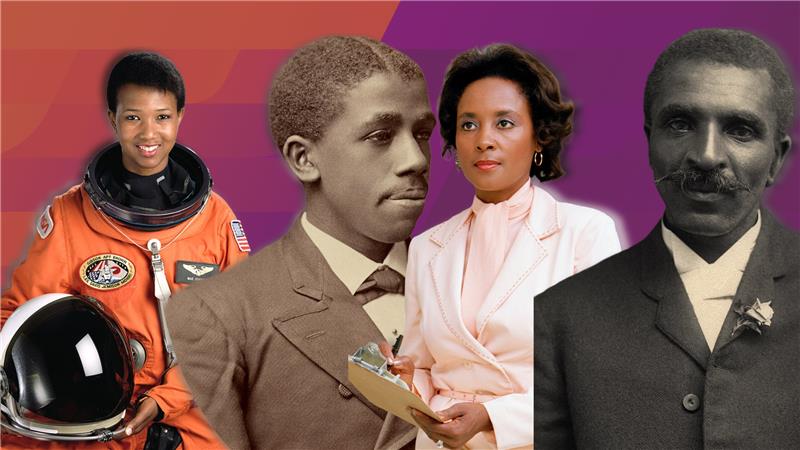
I. Deconstructing “Greatness”: A Framework for Evaluation in Scientific History
The concept of “greatness” in the annals of science is inherently subjective, often shaped by prevailing cultural narratives and historical biases. A definitive declaration of a single “greatest” individual is therefore a reductive exercise. A more rigorous and insightful approach requires deconstructing this term into a multi-faceted analytical framework. This report proposes a holistic, four-part framework to evaluate the contributions of African-American scientists, acknowledging that their achievements occurred within a unique socio-historical context of systemic adversity. Each criterion provides a distinct lens through which to measure impact, and together they offer a nuanced understanding of scientific legacy.
The proposed criteria are:
- Foundational Discovery & Scientific Originality: This measures the degree to which a scientist’s work generated novel knowledge, overturned existing paradigms, or established entirely new fields of inquiry. It prioritizes the pure intellectual contribution to the edifice of science, such as Percy Julian’s landmark total synthesis of complex organic molecules.
- Technological Innovation & Societal Impact: This assesses the practical, tangible effects of a scientist’s work on society. It focuses on inventions, processes, and applications that have directly improved human health, transformed industries, or altered the fabric of daily life. Dr. Patricia Bath’s invention of the Laserphaco Probe, which revolutionized cataract surgery, is a prime example of this criterion.
- Overcoming Adversity & Breaking Barriers: This criterion is indispensable for this specific inquiry. It quantifies the magnitude of the systemic, racial, and institutional obstacles a scientist had to surmount. Achieving scientific excellence is a monumental task in itself; doing so while navigating a society structured on segregation and exclusion, as Katherine Johnson did at the National Advisory Committee for Aeronautics (NACA), represents a distinct and profound dimension of achievement. This criterion posits that the context of an achievement is inseparable from the achievement itself.
- Legacy & Influence: This evaluates a scientist’s impact beyond their own direct research. It encompasses their role in mentoring future generations, creating new institutions or programs, advocating for policy change, and shaping public access to and understanding of science. Dr. Mae Jemison’s post-NASA career as an educator and advocate for STEM diversity powerfully illustrates this form of influence.
These four criteria are not independent but are often causally linked. The history of African-American scientists reveals a recurring pattern where the experience of adversity directly catalyzed scientific innovation. For example, Dr. Patricia Bath’s observation that Black patients suffered from double the rate of glaucoma and higher rates of blindness was a direct consequence of her position within a system of profound health disparity. This observation, born from the context of adversity (Criterion 3), spurred her to propose the new discipline of “Community Ophthalmology,” a framework designed to deliver preventative care to underserved populations. In this way, a systemic negative force was transformed into a catalyst for a specific, targeted, and life-altering scientific and public health innovation (Criterion 2). This pattern of turning barriers into the very subject of scientific inquiry elevates the work of many of these figures from pure science to a form of scientific activism.
II. The Foundational Pillars: Pioneers of Fundamental Science
This section profiles scientists whose primary contributions were to the core body of scientific knowledge, often at the molecular and biological level. Their work laid the groundwork for entire fields and industries, demonstrating a profound mastery of fundamental principles.
A. Dr. Percy Lavon Julian: The Master of Plant-Based Chemical Synthesis
Dr. Percy Lavon Julian stands as a titan of 20th-century organic chemistry, a field he revolutionized through his genius in synthesizing complex medicinal compounds from plant sources. His work was characterized by breathtaking scientific originality and had an immense, life-saving impact on global health.
Julian’s first monumental achievement was the total synthesis of physostigmine, a complex alkaloid found in the Calabar bean, which is used to treat glaucoma. The successful synthesis, completed in 1935, was a landmark in the field of organic chemistry, confirming the structure of the molecule and establishing Julian’s international reputation as a master chemist. His success was all the more remarkable as it required him to publicly correct the work of the eminent English chemist Sir Robert Robinson, a move that could have ended his career had he been wrong.
His second, and arguably more impactful, contribution was pioneering the industrial-scale synthesis of steroids from soybeans. At the time, crucial hormones like progesterone (used to prevent miscarriages) and cortisone (a powerful anti-inflammatory for rheumatoid arthritis) were prohibitively expensive, as they had to be extracted in minuscule quantities from animal spinal cords and bile. Julian devised a method to isolate large quantities of stigmasterol, a plant steroid, from soybean oil and developed an ingenious chemical pathway to convert it into progesterone and, later, a precursor to cortisone known as “Compound S”. This breakthrough shattered the pharmaceutical industry’s dependence on scarce animal sources. Cortisone that had cost hundreds of dollars per gram could now be produced for pennies, making it accessible to millions of arthritis sufferers worldwide.
Julian’s scientific triumphs were achieved in the face of relentless and virulent racism. The grandson of slaves, he grew up in the Jim Crow South. Despite graduating first in his class from DePauw University, he was denied admission to doctoral programs and the teaching assistantships required to fund them. He eventually earned his Ph.D. in Vienna, where he experienced a level of freedom unknown to him in America. Upon returning, DePauw refused to appoint him to a permanent faculty position, and industrial giants like DuPont declined to hire him, explicitly stating they were “unaware he was black”. Even after achieving immense success, when he moved his family into the affluent Chicago suburb of Oak Park, his home was firebombed.
His legacy is one of both scientific and social transformation. By founding Julian Laboratories, he created a space where he could hire and mentor other Black chemists who were excluded from mainstream industrial science, establishing a vital pipeline for underrepresented talent. In recognition of his profound contributions, he became the first Black chemist inducted into the National Academy of Sciences.
B. Dr. Charles Richard Drew: The Architect of the Modern Blood Bank
Dr. Charles Richard Drew revolutionized emergency medicine and surgery through his pioneering work on blood preservation and storage. His contributions were not merely incremental improvements but a fundamental rethinking of how blood could be collected, processed, and deployed on a massive scale, saving an incalculable number of lives.
Drew’s doctoral thesis at Columbia University, “Banked Blood: A Study in Blood Preservation,” was a seminal work that became the blueprint for the modern blood bank. His research yielded two critical innovations. First, he perfected techniques for separating blood plasma—the liquid component—from whole blood. He demonstrated that plasma could be stored for much longer periods than whole blood (up to two months), was less perishable during transport, and could be transfused to any patient regardless of their blood type, as the blood-typing cells had been removed. Second, he systematized the entire process of blood banking, establishing standardized procedures for the use of anticoagulants, preservatives, and contamination-free collection and storage, extending the viable shelf-life of blood products from a mere few days to weeks.
The immediate application of his research came during World War II. As Germany bombed Great Britain, Drew was appointed the medical director of the “Blood for Britain” project. In this role, he operationalized his laboratory findings on an unprecedented scale, organizing a massive blood drive that collected nearly 15,000 donations and shipped over 5,000 liters of life-saving plasma across the Atlantic. This program’s success became the model for the American Red Cross Blood Bank, which was established in 1941 with Drew as its first director. During this time, he also developed “bloodmobiles”—refrigerated trucks that served as mobile donation stations, a concept still in use today.
Drew’s story is also one of profound moral and scientific integrity. He was forced to confront institutionalized racism at the height of his career. The U.S. military and the Red Cross insisted on a policy of segregating donated blood by the race of the donor. Drew vehemently protested this policy, stating it had no scientific basis, as plasma is identical regardless of race. When the organization refused to change its unscientific and discriminatory practice, Drew resigned from his position as director in 1942. This act of defiance, placing scientific truth and human dignity above personal prestige and position, is a crucial component of his greatness. He spent the remainder of his career as a professor and chief surgeon at Howard University, where he dedicated himself to training the next generation of Black surgeons, fighting for their inclusion in medical societies that had long excluded them.
C. Dr. Ernest Everett Just: A Visionary in Developmental Biology
Dr. Ernest Everett Just was a pioneering biologist whose work fundamentally challenged the prevailing scientific understanding of fertilization and embryonic development. Working in the early 20th century, he put forth a holistic vision of the cell at a time when the field was becoming increasingly reductionist.
Just’s research focused on the biological processes of marine invertebrate egg cells, particularly the events that occur during fertilization. His most significant contribution was his emphasis on the critical role of the cell surface, or ectoplasm, in the development of an organism. At the time, the dominant scientific theory held that the nucleus and its genes were the sole determinants of inheritance and development. Just argued, based on meticulous observation, that the cytoplasm and particularly the cell surface were not passive environments but active participants that interacted with the nucleus to guide the developmental process. This work, emphasizing the unity of the cell as a whole, was ahead of its time and presaged modern understandings of cell biology.
Just’s career was profoundly impacted by the scientific and social racism of his era. He worked during the height of the Jim Crow period and the rise of the eugenics movement, which promoted pseudoscientific arguments of white supremacy. As one of the first internationally recognized Black scientists, he faced immense barriers in securing funding, adequate laboratory facilities, and research opportunities in the United States. This professional marginalization forced him to conduct much of his most celebrated research in Europe, particularly at the Stazione Zoologica in Naples, Italy. Despite these obstacles, he earned the first Spingarn Medal from the NAACP in 1915 for his achievements. His struggle and his scientific vision make him a foundational figure not only in developmental biology but also in the history of Black scientists striving for recognition in a hostile world.
III. Architects of the Modern World: Innovation, Invention, and Direct Societal Impact
This section examines figures whose work resulted in tangible technologies, new scientific disciplines, and systemic changes that directly reshaped society, industry, and health. Their greatness is measured not only by the novelty of their ideas but by the breadth and depth of their practical application.
A. George Washington Carver: The Father of Chemurgy and Agricultural Revolution
George Washington Carver is one of the most iconic figures in American science, yet the popular “Peanut Man” narrative often obscures the true nature and scale of his genius. Carver was not merely an inventor of products; he was a systems-level thinker who designed an integrated agricultural and economic model to liberate the post-Reconstruction South from a cycle of poverty and soil depletion.
Carver’s primary and most profound contribution was the promotion of sustainable agriculture through crop rotation. He recognized that the Southern economy’s reliance on single-crop cotton farming had ravaged the soil, trapping poor Black sharecroppers in a state of economic bondage. His solution was to advocate for alternating soil-depleting cotton with nitrogen-fixing legumes like peanuts, soybeans, and sweet potatoes. This practice restored nutrients to the soil, leading to higher cotton yields and providing farmers with nutritious food crops for their families.
This agricultural revolution created a new problem: a massive surplus of peanuts and sweet potatoes for which there was no market. This is where Carver’s famous inventiveness came into play. He became a leading figure in, and is often called the “Father of,” the field of chemurgy—the science of creating industrial products from agricultural raw materials. His development of over 300 uses for the peanut—including milk, cooking oil, paper, soap, wood stains, and plastics—was not a whimsical exercise but a calculated and necessary step to create industrial demand for the new crops. He did the same for sweet potatoes, developing everything from flour and vinegar to postage stamp glue and ink. His work demonstrated a new path for industrial production based on renewable farm products rather than finite resources.
Carver’s entire life was a testament to overcoming the most extreme forms of adversity. Born into slavery around 1864, he was orphaned as an infant and faced constant racial discrimination. He was denied admission to multiple colleges because of his race before finally being accepted at Simpson College and later Iowa State University, where he became the first Black student and graduate. His life’s work at the Tuskegee Institute was a direct and brilliant response to the economic and agricultural devastation left by slavery and the exploitative sharecropping system that followed. He worked tirelessly to educate poor farmers, traveling through the countryside in a “Jesup wagon,” a mobile school used to demonstrate his techniques. His work brought him international fame, and he advised figures like Mahatma Gandhi and President Teddy Roosevelt.
B. Dr. Patricia Bath: Revolutionizing Sight and Championing Health Equity
Dr. Patricia Bath was a pioneering ophthalmologist and inventor whose work fundamentally changed the way cataracts are treated and established a new paradigm for addressing health disparities in medicine. Her career embodies the fusion of brilliant technological innovation with a profound commitment to social justice.
Bath’s most celebrated invention is the Laserphaco Probe, for which she received a patent in 1988, making her the first Black woman physician to do so. This groundbreaking device revolutionized cataract surgery. The probe utilizes a fiber-optic laser to vaporize cataracts with microscopic precision in minutes, allowing for the minimally invasive removal of the damaged lens and the insertion of a replacement. Her method was significantly more accurate, safer, and less invasive than the previous technique, which involved manually grinding and scraping away the cataract. The Laserphaco Probe has helped restore or improve the vision of millions of people worldwide.
Beyond this singular invention, Bath’s greatness lies in her creation of an entirely new discipline: Community Ophthalmology. This innovation was born from her research in the 1970s, which documented for the first time that the prevalence of blindness among Black patients was double that of white patients. She concluded that this disparity was not due to biology but to a lack of access to ophthalmic care. In response, she proposed a new public health framework that combines clinical care, community outreach, and health education to bring preventative services and treatment to underserved populations. This concept was rooted in her personal conviction that “Eyesight is a basic human right”. To put this principle into action, she co-founded the American Institute for the Prevention of Blindness in 1976, an organization dedicated to protecting and restoring sight globally.
Dr. Bath was a relentless barrier-breaker throughout her career. She was the first Black person to complete a residency in ophthalmology at New York University, the first woman to chair an ophthalmology residency program in the United States (at Drew-UCLA), and the first woman faculty member at UCLA’s prestigious Jules Stein Eye Institute. Her life and work demonstrate how a keen scientific mind can be used not only to create new technology but to dismantle the very systems of inequity that create disparate health outcomes.
C. Dr. Shirley Ann Jackson: A Trailblazer in Physics, Policy, and Academia
Dr. Shirley Ann Jackson’s career is a testament to extraordinary intellectual prowess and unparalleled leadership, marking a trajectory that has shattered barriers in theoretical physics, national science policy, and academic administration. Her contributions extend from fundamental research in materials science to shaping the direction of the nation’s scientific and technological enterprise.
Dr. Jackson’s scientific research at the renowned AT&T Bell Laboratories from 1976 to 1991 was in the field of theoretical condensed matter physics. Her work focused on the electronic and optical properties of two-dimensional and quasi-two-dimensional systems, including studies of charge density waves in layered compounds. This area of physics is fundamental to understanding the behavior of electrons in materials and is crucial for the development of semiconductors, the building blocks of all modern electronics. Her doctoral work at MIT, for which she was the first Black woman to earn a Ph.D. from the institution, was in theoretical elementary particle physics, where she studied the interactions of subatomic particles. It is important to note that while her foundational research contributed to the body of knowledge that underpins modern technology, popular claims that she personally invented the technologies behind caller ID, fiber optic cables, or the touch-tone phone are inaccurate. These inventions largely predate her arrival at Bell Labs in 1976, a fact that Dr. Jackson herself does not contest.
Perhaps Dr. Jackson’s most profound and unique form of greatness lies in her monumental career after her primary research phase, where she translated her scientific expertise into leadership at the highest levels of government and academia. In 1995, President Bill Clinton appointed her as Chairman of the U.S. Nuclear Regulatory Commission (NRC), making her both the first woman and the first African American to hold the position. As head of the NRC, she had ultimate authority over the safety and regulation of all nuclear materials and facilities in the country. In 1999, she became the 18th president of Rensselaer Polytechnic Institute (RPI), becoming the first African-American woman to lead a top-ranked national research university. Her leadership transformed RPI into a world-class institution. For her lifetime of achievements, she was awarded the National Medal of Science, the nation’s highest honor in science and engineering, by President Barack Obama in 2016. Dr. Jackson’s career demonstrates a rare ability to excel in pure science and then leverage that expertise to lead and shape the very institutions that drive scientific progress.
IV. Calculating the Cosmos: The Minds Behind the Space Race
The American space program represents one of the most ambitious scientific and engineering undertakings in human history. At the height of the Cold War, this endeavor was a proxy for national power and technological supremacy. The indispensable contributions of African-American scientists and mathematicians to this effort carried immense symbolic weight, serving as a powerful refutation of the racist ideologies that sought to exclude them from the nation’s greatest triumphs.
A. Katherine Johnson: The Human Computer Who Guided Humanity to the Moon
Katherine Johnson was a mathematician of prodigious talent whose calculations were critical to the success of the U.S. manned spaceflight program. Her mind was the trusted engine behind some of NASA’s most historic missions, at a time when the field of computation was transitioning from human intellect to electronic machines.
Johnson’s mastery of analytic geometry and orbital mechanics made her an essential asset to the Space Task Force. Her core contributions include:
- Calculating Trajectories for Project Mercury: In 1961, she calculated the precise trajectory for Alan Shepard’s Freedom 7 mission, the flight that made him the first American in space. Her calculations ensured that recovery crews could find his capsule safely after splashdown.
- Verifying the Machines: As NASA began using IBM electronic computers for complex orbital calculations, a deep-seated trust in Johnson’s human intellect remained. Before his historic 1962 flight to become the first American to orbit the Earth, astronaut John Glenn refused to proceed until Johnson personally re-checked the computer’s figures by hand. “If she says they’re good,” Glenn famously declared, “then I’m ready to go”. This moment signifies her unparalleled reputation for accuracy and the critical role of human intelligence in the early days of space exploration.
- Enabling the Moon Landing: Her work was indispensable to the Apollo program. She calculated the rendezvous paths that allowed the Apollo 11 lunar lander to sync with the command module orbiting the Moon, a crucial step in getting the astronauts home safely. Furthermore, during the near-disastrous Apollo 13 mission, her work on backup procedures and navigation charts helped the crew plot a safe return path to Earth.
Johnson achieved all of this while navigating the demeaning realities of segregation. She began her career at the Langley Research Center in the segregated “West Area Computing” unit, where Black female mathematicians were required to use separate restrooms and dining facilities. The story of her having to run half a mile to use the “colored” restroom, as depicted in the film
Hidden Figures, highlights the physical and psychological burdens imposed by institutionalized racism. She had to be assertive and persistent simply to be included in the engineering meetings where the flight plans she was calculating were being discussed, breaking down both gender and racial barriers in a world dominated by white male engineers. Her career was a quiet but powerful act of resistance, proving through sheer intellectual force that she belonged at the center of America’s greatest technological endeavor.
B. Dr. Mae Jemison: The Polymath Who Broke Earth’s Orbit
Dr. Mae Jemison is a physician, engineer, and astronaut whose career embodies a multidisciplinary approach to science and a deep commitment to public service and inspiration. Her journey into orbit was a landmark achievement that fulfilled the legacy of pioneers like Katherine Johnson and opened a new chapter for women and minorities in space exploration.
On September 12, 1992, Dr. Jemison became the first African-American woman to travel to space as a science mission specialist aboard the Space Shuttle Endeavour on mission STS-47. Her presence on that flight was the realization of a childhood dream, one that was formed as she watched the Apollo missions and was frustrated by the complete lack of female astronauts. Her journey to NASA was one of remarkable breadth; she earned dual degrees from Stanford in chemical engineering and African-American studies, followed by a medical degree from Cornell University, and served as a medical officer in the Peace Corps in Sierra Leone and Liberia before being selected for the astronaut corps.
During her eight-day mission in space, Jemison was not a passive passenger but an active scientist. She was a co-investigator on a bone cell research experiment designed to study the effects of weightlessness on calcium loss in bones, a critical area of research for long-duration spaceflight. She also conducted experiments on motion sickness and the fertilization of frog eggs in a microgravity environment.
Dr. Jemison’s greatness is particularly evident in her post-NASA career, where she has become a powerful and visible advocate for science education and a role model for aspiring scientists (Criterion 4). After leaving the astronaut corps in 1993, she founded a technology consulting firm, taught environmental studies at Dartmouth College, and now leads the 100 Year Starship project, a DARPA-funded initiative to ensure human interstellar travel capability within the next century. She actively works to inspire young people, particularly women and minorities, to pursue careers in STEM, using her historic platform to argue that everyone has a right to participate in the adventure of scientific discovery. Her life’s work demonstrates that breaking a barrier is not an end in itself, but a beginning—an opportunity to hold the door open for those who follow.
V. The Unseen Variable: Quantifying the Impact of Systemic Adversity
A credible assessment of the “greatest” African-American scientist cannot be conducted without treating systemic racism as a fundamental variable in the equation of their achievements. The obstacles these individuals faced were not mere background noise; they were a constant, quantifiable force that demanded an extraordinary expenditure of energy, intellect, and resilience simply to participate in the scientific enterprise. To ignore this “adversity tax” is to fundamentally misunderstand the magnitude of their accomplishments.
The careers of these pioneers are replete with examples of this tax. Percy Julian graduated first in his class from DePauw in 1920, yet it took him over a decade to secure a Ph.D. because institutions like Harvard refused him the teaching assistantship required for admission—a delay imposed solely by his race. This lost decade represents a direct cost to scientific progress, a period during which a brilliant mind was artificially held back. Similarly, Katherine Johnson’s half-mile walk to a segregated restroom was not just an indignity; it was a tangible drain on time and energy that could have been devoted to calculating orbital trajectories. For Charles Drew, adhering to scientific and moral truth by protesting the unscientific policy of blood segregation cost him his directorship of the national program he had built from the ground up. This demonstrates a cruel paradox: in a prejudiced system, the very act of upholding scientific principles can result in professional penalty.
Consequently, the act of practicing science became, for these individuals, an act of resistance. By excelling in fields predicated on objective truth and merit, they implicitly and explicitly challenged a social order built on the pernicious falsehood of racial hierarchy. When Percy Julian wrote a scathing letter to the American Chemical Society in 1956 for accommodating segregation at a conference, he was not just a chemist; he was a scientist using the platform his excellence had earned him to demand that his professional community live up to its own ideals of objectivity and reason. He argued that the Black scientist, by necessity, had to be both a humanist and a scientist, bridging the gap by circumstance if not by choice.
Therefore, any evaluation of greatness that does not account for this adversity variable is incomplete. The achievements of these scientists are not simply remarkable in spite of the barriers they faced; their achievements are magnified by them. The intellectual and emotional energy required to overcome these hurdles must be factored into the final assessment, revealing a level of fortitude and genius that is, by any objective measure, extraordinary.
VI. Synthesis and Analysis: A Comparative Assessment
Applying the four-part framework established in this report allows for a nuanced, comparative analysis of the leading figures in African-American scientific history. This synthesis reveals that different individuals exemplify different dimensions of greatness, making a singular declaration problematic. However, a structured evaluation highlights a select few whose contributions represent a remarkable confluence of all four criteria at the highest levels.
George Washington Carver’s greatness is most pronounced in his direct societal impact (Criterion 2) and his life story of overcoming adversity (Criterion 3). He designed a new agricultural system that had the potential to economically revitalize an entire region. Dr. Patricia Bath and Dr. Shirley Ann Jackson are modern exemplars of combining groundbreaking innovation (Criterion 2) with relentless barrier-breaking (Criterion 3) and a commitment to creating new institutional pathways and addressing societal inequities (Criterion 4). Katherine Johnson’s work was critical to a singular, monumental national achievement (Criterion 2), and her story has become a powerful, globally recognized testament to overcoming prejudice in a high-stakes environment (Criteria 3 and 4).
The following table provides a structured summary of this multi-criteria analysis for the foremost candidates.
| Scientist | Primary Field | Key Innovation / Discovery | Primary Societal Impact | Adversity Context | Legacy & Influence Metric |
| G. W. Carver | Agricultural Science | Chemurgy; Crop Rotation Systems | Economic revitalization of the South; agricultural sustainability | Born into slavery; educational segregation | High (Transformed Tuskegee; global reputation) |
| Percy Julian | Organic Chemistry | Synthesis of physostigmine & cortisone from plants | Made vital medicines affordable and mass-producible | Denied academic/industry jobs; housing violence | High (Founded lab; mentored Black chemists; NAS) |
| Charles Drew | Medicine / Surgery | Blood plasma preservation; modern blood banking | Saved countless lives; created global standard for blood storage | Resigned over blood segregation policy | High (Father of the Blood Bank; trained surgeons) |
| K. Johnson | Mathematics | Orbital mechanics calculations | Enabled success of Mercury & Apollo missions | Segregated workplace; gender & race barriers at NASA | Very High (Hidden Figures; Presidential Medal of Freedom) |
| Patricia Bath | Ophthalmology | Laserphaco Probe; Community Ophthalmology | Revolutionized cataract surgery; addressed health disparities | Broke multiple “firsts” for Black women in medicine | High (Founded AIPB; patented key medical device) |
| S. A. Jackson | Theoretical Physics | Research in condensed matter physics | Leadership in science policy (NRC) & academia (RPI) | First Black woman Ph.D. from MIT; racism in academia | Very High (National Medal of Science; university president) |
Export to Sheets
While every individual in this analysis is a monumental figure, a compelling case can be made that Dr. Percy Julian and Dr. Charles Drew occupy a unique tier. Their careers represent an extraordinary synthesis of all four criteria at the most profound levels. Their work was both fundamentally novel and paradigm-shifting within their scientific disciplines (Criterion 1), and it had a direct, massive, and life-saving impact on global human health (Criterion 2). They achieved this while facing and actively fighting against some of the most vicious forms of professional and societal racism (Criterion 3). Finally, they both established enduring legacies by creating institutions and training future generations of scientists and doctors who had been systematically excluded from the field (Criterion 4). While figures like Carver transformed an economy and Johnson helped reach the Moon, the specific combination of world-changing medical innovation, scaled for global benefit, and profound moral courage in the work of Julian and Drew presents a uniquely powerful and complete definition of scientific greatness.
VII. The Enduring Legacy: Contemporary Influence and the Scientists of Tomorrow
The legacy of these great scientists is not confined to historical archives or textbooks. It is a living, evolving force visible in the expanding community of scientists they inspired and the opportunities they created. The barriers broken by Julian, Drew, Johnson, and others paved the way for contemporary figures to reach new heights. The work of Dr. Kizzmekia Corbett, a viral immunologist who was a key scientist on the team at the National Institutes of Health that developed the Moderna COVID-19 vaccine, is a direct inheritance of this legacy of excellence.
Furthermore, the tradition of making science accessible to the public, a practice championed by George Washington Carver through his educational outreach to farmers, continues today through prominent science communicators like astrophysicist Dr. Neil deGrasse Tyson. By translating complex scientific concepts for a broad audience, they carry on the essential work of fostering scientific literacy and inspiring curiosity in the next generation.
Ultimately, the story of the greatest African-Americans in science is not the story of a single individual, but of a collective, multi-generational struggle for truth—both scientific and social. Their ultimate legacy lies not only in the discoveries they made or the technologies they invented, but in the enduring proof that intellectual excellence can, and must, transcend the artificial and unjust barriers created by society. Their lives and work ensure that the path for the scientists of tomorrow is wider, clearer, and more accessible than the one they were forced to travel.

