


Introduction
The history of African-American literature is a continuous narrative of aesthetic innovation and political struggle, in which its “legends” have not only chronicled the Black experience but have actively shaped the American conscience and fundamentally redefined the boundaries of the American literary canon. The evolution of this tradition can be traced through a dynamic and often contentious dialogue with the concept of “authenticity”—from seeking external validation to achieving internal self-definition and, ultimately, to re-appropriating the entire literary landscape. This report, employing a chronological framework integrated with thematic analysis, will examine the key literary movements and their most significant figures, tracing the arc of this extraordinary body of work. The analysis will begin with the foundational slave narratives of the 18th and 19th centuries, proceed through the cultural explosion of the Harlem Renaissance, confront the stark realism and existential inquiries of the mid-20th century, deconstruct the revolutionary poetics of the Black Arts Movement, and culminate in an examination of the post-Civil Rights laureates and contemporary masters who continue to expand and challenge the tradition. Through this comprehensive investigation, the report will demonstrate that African-American literature is not a marginal subgenre but a central and indispensable force in the shaping of American letters and identity.
The following table provides a concise overview of the major literary periods that structure this report, establishing the key chronological and thematic signposts for the detailed analysis that follows.
Table 1: Major Movements in African-American Literature
| Era/Movement | Approximate Dates | Key Figures | Defining Characteristics & Themes |
| The Foundational Period | 1746–1900 | Jupiter Hammon, Phillis Wheatley, Frederick Douglass, Harriet Jacobs, William Wells Brown, Harriet E. Wilson | Literacy as an act of resistance; slave narratives as abolitionist tools; establishing Black humanity through authorship; themes of freedom, religion, and the brutality of enslavement. |
| The Harlem Renaissance | c. 1918–1937 | W.E.B. Du Bois, Alain Locke, Langston Hughes, Zora Neale Hurston, Claude McKay, Countee Cullen | “New Negro” consciousness; celebration of Black culture, folklore, and heritage; artistic self-determination; debates over art as propaganda vs. art for art’s sake; influence of jazz and blues. |
| The Era of Protest and Urban Realism | 1940–1965 | Richard Wright, Ralph Ellison, James Baldwin, Gwendolyn Brooks, Lorraine Hansberry | Confronting systemic racism in the urban North; psychological and existential effects of oppression; social protest and naturalism; exploration of “invisibility” and moral failure in America. |
| The Black Arts Movement | 1965–1975 | Amiri Baraka, Larry Neal, Nikki Giovanni, Sonia Sanchez, Haki Madhubuti | “Aesthetic and spiritual sister of Black Power”; art as a political and revolutionary tool; creation of a “Black Aesthetic”; separatism and Black nationalism; rejection of Western artistic standards. |
| The Post-Civil Rights Era & Contemporary Period | 1970s–Present | Toni Morrison, Alice Walker, August Wilson, Colson Whitehead, Jesmyn Ward, Ta-Nehisi Coates | Excavation of historical trauma and memory; womanism and intersectionality; re-appropriation of the American canon; blending of genre and historical fiction; direct engagement with the legacy of slavery and Jim Crow. |
Part I: The Genesis of a Tradition: From Enslavement to Emancipation (1746–1900)
The foundational period of African-American literature was defined by a struggle for the very right to narrate. In a society where the vast majority of Black people were legally defined as chattel property, the act of writing was not merely an artistic expression but a profound political assertion of humanity. The earliest authors were compelled to create within a framework of profound skepticism and hostility, where their primary task was often to prove their own intellectual and spiritual capacity. This literature, born of necessity, became the bedrock of a tradition, establishing core themes of freedom, faith, and resistance that would resonate for centuries. The journey from spiritual poetry to the slave narrative and the first forays into fiction and drama marks the initial, revolutionary steps in claiming a voice and an identity within the hostile landscape of early America.
The First Voices: Literacy as an Act of Defiance
The earliest published works by African Americans emerged in the 18th century, a period when the paradox of a nation founded on liberty while upholding slavery was at its most acute. For the enslaved, literacy was a dangerous and often forbidden pursuit, yet it was the essential tool for articulating a spiritual and intellectual life that defied the logic of bondage.
Jupiter Hammon (1711-1806) stands as the first published Black American writer. Born into slavery in New York, Hammon received an education alongside the children of the estate owner, an unusual privilege that allowed him to develop his literary talents. In 1761, he published his poem “An Evening Thought: Salvation by Christ with Penitential Cries” as a broadside. Hammon’s work is deeply imbued with Christian theology, a recurring theme in early African-American writing. His poetry and essays often focused on the promise of spiritual salvation as a form of ultimate freedom, a perspective shaped by his position as both a devout Christian and a lifelong enslaved person. In his “Address to the Negroes of the State of New York” (1786), written at the age of 76, he articulated this complex worldview, stating, “If we should ever get to Heaven, we shall find nobody to reproach us for being black, or for being slaves”. While he promoted gradual emancipation, his work was primarily a testament to an inner life of faith and intellect that the institution of slavery sought to deny.
Phillis Wheatley (c. 1753-1784) elevated this nascent tradition to the international stage. Kidnapped from West Africa around the age of seven and sold into slavery in Boston, Wheatley demonstrated an extraordinary intellectual capacity that her owners, the Wheatley family, chose to cultivate. They taught her to read and write, providing her with an education in the Bible, Greek and Latin classics, and British literature. By 1773, she had published
Poems on Various Subjects, Religious and Moral, making her not only the first African American to publish a book but also the first to achieve an international reputation as a writer. Her work was praised by leading figures of the American Revolution, including George Washington, for its refined neoclassical style.
However, Wheatley’s achievement was met with profound disbelief from the white establishment, which found it difficult to accept that a Black woman, and an enslaved one at that, could produce such sophisticated poetry. This skepticism forced a confrontation that would become a defining feature of early Black authorship. To secure publication, Wheatley had to defend her authorship before a panel of prominent white Bostonian men. The resulting “authenticating preface,” or attestation, signed by these leaders and included in her book, served as a formal validation of her work. This document, while enabling her publication, stands as a stark symbol of the era’s power dynamics. It represents the first major instance where Black literary genius was subjected to the scrutiny and required the official sanction of the dominant white culture, underscoring that the primary battle was not over literary merit but over the fundamental recognition of Black intellectual capacity.
The Narrative as Resistance: Codifying the Abolitionist Argument
As the 19th century progressed, the slave narrative emerged as the most powerful and influential genre in African-American literature. These autobiographical accounts of life in bondage were not merely personal memoirs; they were potent political weapons, crafted to expose the inhumanity of slavery and fuel the burgeoning abolitionist movement.
Frederick Douglass (1818-1895) is the towering figure of this tradition. After escaping from slavery in Maryland, Douglass became a brilliant orator and a leading abolitionist. His first autobiography,
Narrative of the Life of Frederick Douglass, an American Slave (1845), is the quintessential slave narrative and a masterpiece of American literature. In stark, powerful prose, Douglass recounts the physical and psychological brutalities of slavery. More than just a chronicle of suffering, the
Narrative is a masterfully constructed argument. Douglass’s detailed account of his journey to literacy is central to this argument; he presents his education not just as a personal achievement but as the very means by which he grasped his own humanity and the injustice of his condition. By demonstrating his intellectual prowess and moral authority, Douglass’s work shattered the racist justifications for slavery, which were predicated on the supposed intellectual inferiority of Black people. His later autobiographies, such as
My Bondage and My Freedom, expanded on these themes, and his influential abolitionist newspaper, The North Star, continued his literary activism, solidifying his status as a foundational voice for Black liberation.
While Douglass’s narrative became the archetype, the work of Harriet Jacobs (1813-1897) provided a crucial and distinct perspective. Her 1861 autobiography, Incidents in the Life of a Slave Girl, was one of the first narratives to focus explicitly on the unique horrors faced by enslaved women. Jacobs’s account details the constant threat and reality of sexual exploitation at the hands of her enslaver. Her story of concealing herself for seven years in a tiny attic crawlspace to protect herself and remain near her children is a harrowing testament to the psychological fortitude and specific forms of resistance required of women under slavery. Her work expanded the genre by centering the gendered violence inherent in the institution, making it an indispensable text for understanding the intersection of racial and sexual oppression.
Inventing the Form: The First Fictions and Dramas
Beyond the powerful genre of the slave narrative, the 19th century also saw African-American writers begin to venture into fiction and drama, laying the groundwork for future generations of novelists and playwrights. These pioneers adapted literary forms to explore themes that autobiography could not always fully encompass, such as the complex legacy of miscegenation and the imaginative possibilities of escape.
William Wells Brown (1814-1884), a prominent abolitionist and escaped slave, was a remarkable multi-genre innovator. In 1853, he published
Clotel; or, The President’s Daughter in London, recognized as the first novel published by an African American. The novel, which explores the tragic lives of the fictional mixed-race daughters of Thomas Jefferson and an enslaved woman, directly confronts the hypocrisy at the heart of the American republic. It dissects the destructive effects of slavery on the family unit and the precarious existence of people of mixed race in a society obsessed with racial purity. Brown’s pioneering work did not stop with the novel. In 1858, he published
The Escape; or, A Leap for Freedom, the first play ever published by a Black American. This drama, centered on the escape of an enslaved couple, brought the themes of resistance and the quest for freedom to the theatrical stage, marking a significant expansion of Black literary expression.
The literary landscape within the United States presented its own unique challenges, a fact highlighted by the work of Harriet E. Wilson (1825-1900). In 1859, she anonymously published Our Nig; or, Sketches from the Life of a Free Black, which holds the crucial distinction of being the first novel published by an African American within the continental United States. Wilson’s novel tells the story of a young Black indentured servant in the North, exposing the fact that racism and exploitation were not confined to the slaveholding South. The novel’s publication in Boston, and its subsequent obscurity for over a century, speaks to the immense barriers faced by Black authors, particularly women, in the American publishing world. Together, the work of writers like Victor Séjour, who published the first known work of fiction by an African American in French in 1837, and pioneers like Brown and Wilson, demonstrates the determined effort to claim space in every literary form, both at home and abroad.
Part II: The Harlem Renaissance: The Birth of the “New Negro” (c. 1918–1937)
The Harlem Renaissance was a watershed moment in American cultural history, an unprecedented flourishing of African-American art, music, and literature. Centered in the Harlem neighborhood of New York City, this “spiritual coming of age” was more than just an artistic movement; it was a conscious effort to define and celebrate a new Black identity—the “New Negro”—who was proud, assertive, and intellectually engaged. Fueled by demographic shifts and shaped by intense intellectual debate, the Renaissance produced a stunning body of work that explored the beauty and pain of Black life. Yet, the movement was not monolithic. It was characterized by a vibrant and often contentious dialogue about the very purpose and form of Black art, a debate embodied by its leading literary figures who wrestled with how to best represent their people’s experience, whether through mastering traditional forms or by forging new aesthetics from the vernacular of their communities.
A “Spiritual Coming of Age”: Context and Ideology
The social and intellectual foundations of the Harlem Renaissance were laid by two transformative forces: the mass movement of people and the powerful circulation of ideas.
The Great Migration served as the demographic engine of the movement. Between 1910 and 1930, hundreds of thousands of African Americans fled the oppressive Jim Crow laws, economic exploitation, and racial violence of the rural South for the promise of industrial jobs and greater personal freedom in Northern urban centers. Harlem, in particular, became a destination, its population swelling as it transformed into the cultural and political capital of Black America. This unprecedented concentration of people from diverse backgrounds—from unskilled laborers to an educated middle class—created a dynamic environment of shared experience and collective identity, fostering the “group expression and self-determination” that would define the era.
This new urban population became the audience for and subject of the work of the movement’s intellectual architects. Figures like W.E.B. Du Bois and Alain Locke provided the philosophical framework for the Renaissance. Du Bois, a co-founder of the NAACP and editor of its magazine, The Crisis, had long advocated for the “Talented Tenth”—an elite group of Black intellectuals and artists who could lead the race forward. He championed the idea of art as a form of propaganda, a tool to challenge racist stereotypes and advance the cause of civil rights. In contrast, Alain Locke, a Harvard-educated philosopher often called the “dean” of the Renaissance, articulated a vision of art as a means of internal “spiritual coming of age”. In his seminal 1925 anthology,
The New Negro: An Interpretation, Locke gathered the poetry, fiction, and essays of the movement’s rising stars to announce the arrival of a new consciousness. This “New Negro” was no longer a problem to be solved but a vibrant, modern individual, shaking off the legacy of the past to forge a new identity with confidence and pride. Locke’s anthology became the movement’s defining text, codifying its ideals and introducing its key figures to a national audience.
The Poets of the People: Jazz, Sonnets, and the Vernacular
Poetry was at the heart of the Harlem Renaissance, and its leading practitioners embodied the era’s central artistic debates. They experimented with form and voice, drawing inspiration from both European traditions and the vibrant culture of Black America to articulate the complexities of the “New Negro” experience.
Langston Hughes (1901-1967) is arguably the most enduring and beloved voice of the Renaissance, often called the “poet laureate of Harlem”. Hughes made a conscious break from the genteel tradition, arguing in his influential 1926 essay, “The Negro Artist and the Racial Mountain,” that Black artists should embrace their own culture and heritage “without fear or shame” rather than conforming to white or Black bourgeois standards. He put this philosophy into practice by pioneering the use of jazz and blues rhythms in his poetry. His first collection,
The Weary Blues (1926), captured the sounds, sorrows, and resilience of ordinary Black life in Harlem’s cabarets and on its streets. By infusing his poetry with the vernacular and musicality of the people, Hughes created a new, distinctly African-American poetic language that was both accessible and profound.
Claude McKay (1889-1948), a Jamaican-born writer, brought a militant and international perspective to the movement. McKay masterfully demonstrated the power of using traditional European literary forms to convey radical, anti-racist messages. His most famous poem, “If We Must Die” (1919), is a Shakespearean sonnet that became a defiant anthem of resistance against racial violence. This melding of classical form with revolutionary content was a hallmark of his work. His 1928 novel,
Home to Harlem, became a bestseller, offering a vivid and unvarnished depiction of the neighborhood’s nightlife and working class. While celebrated for its energy, the novel was also controversial, criticized by figures like Du Bois for what they saw as a reinforcement of negative stereotypes, highlighting the internal tensions of the movement.
Countee Cullen (1903-1946) represented a different aesthetic path. Deeply influenced by the English Romantic poets like Keats and Shelley, Cullen believed that art could transcend race and sought to prove Black literary genius by mastering traditional poetic forms. His first collection of poems,
Color (1925), was widely acclaimed for its technical skill and lyrical beauty. However, his more conservative, Eurocentric approach put him at odds with modernists like Hughes, who criticized him for not fully embracing a distinct Black aesthetic. This contrast between Hughes, the innovator of jazz poetry, and Cullen, the master of the classical lyric, illuminates the central debate of the Harlem Renaissance: should Black artists create a new art form rooted in their unique cultural experience, or should they prove their equality by achieving excellence within the established Western tradition? This vibrant conflict of ideas, rather than a single, unified style, is a key part of the movement’s enduring legacy.
Folklore, Gender, and the Southern Vernacular: The Genius of Zora Neale Hurston
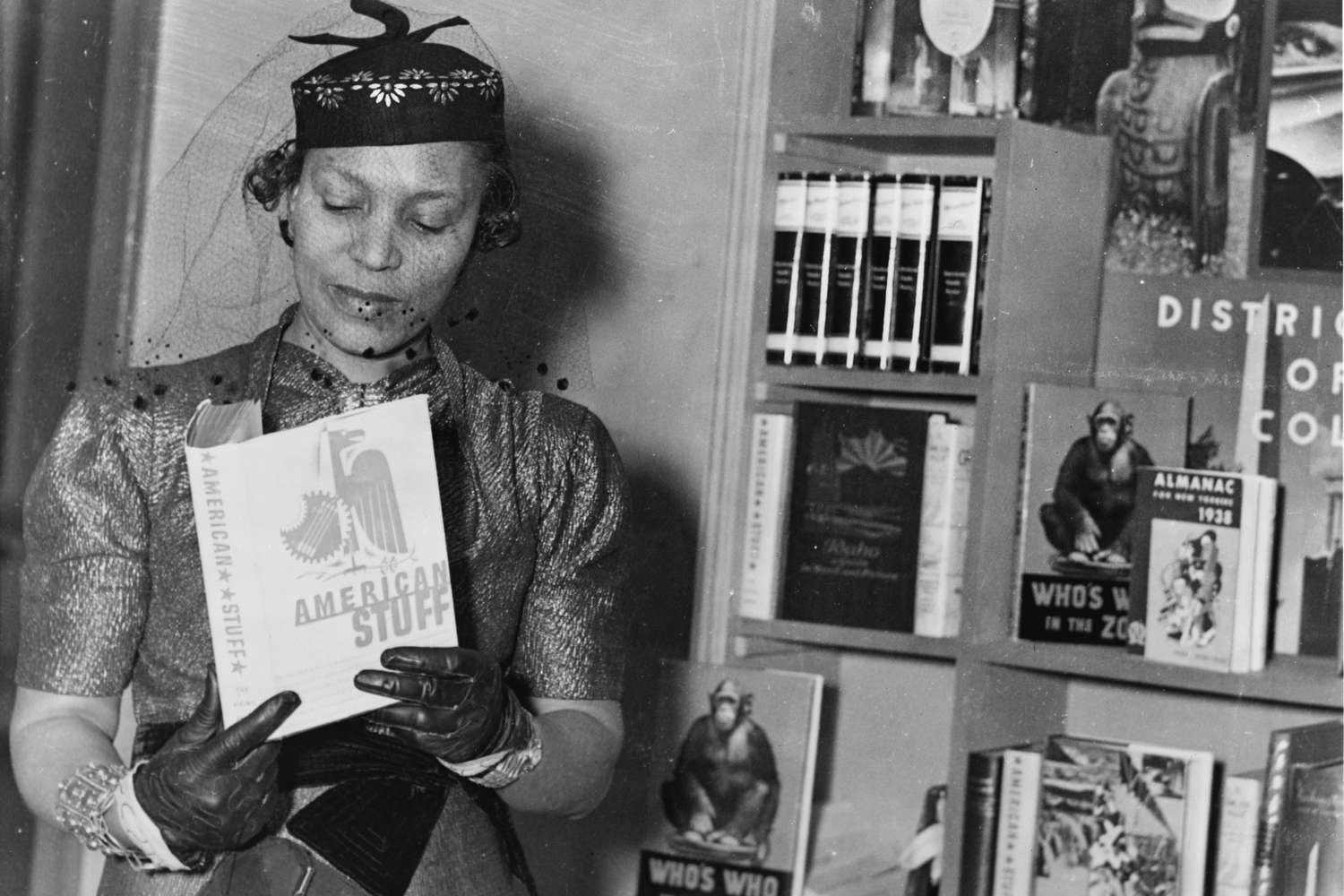
While much of the Harlem Renaissance focused on the urban experience of the “New Negro,” Zora Neale Hurston (1891-1960) turned her attention to the rich, untapped cultural wellspring of the rural South. A trained anthropologist as well as a brilliant novelist, Hurston dedicated her work to celebrating the folklore, language, and traditions of the communities from which the Great Migration had sprung.
Her masterpiece, Their Eyes Were Watching God (1937), stands as one of the crowning achievements of the era and of American literature as a whole. The novel was revolutionary in several respects. First, Hurston masterfully captured the dialect and oral storytelling traditions of rural Black Florida, treating the vernacular not as a caricature but as a rich and poetic language capable of expressing profound human truths. Second, the novel centers on the journey of Janie Crawford, a Black woman seeking not political rights or racial uplift in the public sphere, but personal freedom and self-realization through her relationships. This focus on a Black woman’s interior life and her quest for an independent voice was groundbreaking. At the time of its publication, the novel received criticism from some male contemporaries, including Richard Wright, who felt its focus on personal relationships and its use of dialect were not sufficiently political or protest-oriented. However, decades later, the novel was rediscovered and championed by a new generation of Black women writers, and it is now celebrated for its profound exploration of race, gender, and a woman’s quest for identity on her own terms.
Part III: The Literature of Protest and Existence (1940–1965)
Following the cultural efflorescence of the Harlem Renaissance, African-American literature entered a new, more confrontational phase. The writers who rose to prominence in the decades leading up to and during the height of the Civil Rights Movement shifted the literary focus from the celebration of culture to a direct and unflinching examination of the psychological violence of systemic racism. This era was defined by a stark realism that exposed the brutal conditions of the urban North and a deep existential inquiry into the nature of identity in a society that rendered Black people invisible. These authors moved the conversation from “Look at our beautiful culture” to “Look at what your society is doing to our souls,” forcing a moral and psychological reckoning upon the American consciousness.
The Weight of the Urban North: Naturalism and Invisibility
As the Great Migration continued, the hopeful promise of the North soured for many into the grim reality of segregated ghettos, economic exploitation, and pervasive racism. The literature of this period reflected this disillusionment, adopting the unsparing lens of naturalism to portray characters trapped by social and economic forces beyond their control.
Richard Wright (1908-1960) inaugurated this new era of social protest with his explosive 1940 novel, Native Son. The story of Bigger Thomas, a young Black man in Chicago whose life spirals into violence after he accidentally kills a white woman, was a radical departure from the themes of the Harlem Renaissance. Wright employed a stark, deterministic naturalism to argue that Bigger was not a born monster but a product of the oppressive, dehumanizing environment that American racism had created. The novel’s raw power and its refusal to offer easy comfort forced a national conversation about the systemic roots of racial violence, making it one of the most influential—and controversial—books of its time.
Ralph Ellison (1914-1994) offered a more philosophically complex, though no less damning, critique of American society in his monumental novel, Invisible Man (1952). The novel, which won the National Book Award, follows its unnamed narrator on a surreal journey from the South to Harlem as he struggles with his identity in a world that refuses to see him as a human being. Ellison’s central metaphor of “invisibility” captured the profound psychological and existential alienation of being Black in America—the experience of being seen only through the distorting lens of stereotypes and projections, never for who one truly is. Blending realism, surrealism, and folklore,
Invisible Man is a complex meditation on race, identity, and ideology. It critiques not only the overt racism of white society but also the rigid dogmas of Black nationalist and communist movements, ultimately arguing for a recognition of individual complexity over simplistic labels.
The Fire This Time: The Prophetic Voice of James Baldwin
No writer from this period dissected the moral and psychological failures of America with more eloquence and urgency than James Baldwin (1924-1987). A novelist, essayist, and playwright, Baldwin became a leading voice of the Civil Rights Movement, bridging the personal and the political with a searing, prophetic intensity.
Baldwin’s work is deeply rooted in his own experiences. His semi-autobiographical first novel, Go Tell It on the Mountain (1953), draws on his Harlem childhood to explore the complex interplay of religion, family, and burgeoning identity in the life of a young man. He broke new literary ground with his second novel,
Giovanni’s Room (1956), which frankly depicted a homosexual relationship between two white men in Paris. By writing about white characters, Baldwin insisted on his right as an artist to explore universal human themes, while the novel’s subject matter challenged the rigid categories of race and sexuality, making him a pioneering voice in both African-American and LGBTQ+ literature.
It was as an essayist that Baldwin’s voice achieved its greatest public influence. Collections like Notes of a Native Son (1955) and, most famously, The Fire Next Time (1963) established him as the nation’s foremost critic of its racial hypocrisy. In prose that was at once lyrical and lacerating, Baldwin laid bare the psychological damage that racism inflicts on both the oppressed and the oppressor.
The Fire Next Time, published at the height of the Civil Rights Movement, was an urgent warning to white America, arguing that the nation’s refusal to confront its history of racial injustice would lead to its own destruction. Baldwin’s ability to articulate the deep-seated pain and righteous anger of Black Americans, while still holding out the possibility of love and redemption, made him an indispensable moral compass for his time.
Poetry and Drama of the Movement: Voices from the South Side and Broadway
The era’s spirit of confrontation and its focus on the realities of Black life also found powerful expression on the stage and in poetry, with two women in particular creating landmark works that brought new dimensions of the Black experience to mainstream American culture.
Gwendolyn Brooks (1917-2000) became a pivotal figure in American poetry when, in 1950, she became the first African American to win the Pulitzer Prize for her collection Annie Allen. Brooks, who spent her life in Chicago, became the poetic chronicler of the city’s South Side. Her first collection,
A Street in Bronzeville (1945), demonstrated her extraordinary technical mastery, using traditional forms like the sonnet and the ballad to capture the everyday lives, dreams, struggles, and quiet dignity of her urban Black community. Brooks’s poetry gave voice to the ordinary people whose lives were shaped by the forces of migration and segregation, rendering their experiences with a precision and empathy that was both deeply specific and universally resonant.
Lorraine Hansberry (1930-1965) achieved a historic breakthrough in American theater with her play A Raisin in the Sun (1959). The play, which depicts the struggles of the Younger family on Chicago’s South Side as they attempt to decide how to use a life insurance check, was a watershed moment for Broadway. It was the first play by an African-American woman to be produced on Broadway and was hailed for its powerful and realistic representation of Black family life. Hansberry’s drama movingly explored the theme of the “dream deferred”—a concept borrowed from Langston Hughes—as it tackled issues of housing discrimination, assimilation, and the search for dignity in a racist society. By presenting a complex, multi-dimensional Black family to a mainstream audience, Hansberry challenged longstanding stereotypes and created a work that remains a cornerstone of the American theatrical canon.
Part IV: The Black Arts Movement: Art for the People’s Sake (1965–1975)
The Black Arts Movement (BAM) represented a radical paradigm shift in the purpose and practice of African-American art. Emerging in the mid-1960s, it was not merely an artistic school but a cultural revolution, inextricably linked to the political ideologies of the Black Power movement. Its proponents rejected the perceived integrationist goals of earlier eras and instead advocated for the creation of art that was explicitly for Black people, by Black people, and in the service of Black liberation. This shift redefined the role of the artist from that of a witness or creator to an explicit “cultural warrior.” The movement’s true innovation lay not only in its revolutionary aesthetic but also in its commitment to building the independent institutions—publishing houses, theaters, and journals—necessary to achieve true artistic and cultural self-determination outside the control of the white establishment.
The Black Aesthetic: “The Spiritual Sister of Black Power”
The Black Arts Movement was born from the fiery political climate of the mid-1960s. Its symbolic beginning is often traced to the period following the assassination of Malcolm X in 1965, an event that galvanized a more militant and nationalist turn in the struggle for Black liberation. As the writer and theorist
Larry Neal famously declared, BAM was the “aesthetic and spiritual sister of the Black Power concept”. This connection was fundamental: the movement applied the political tenets of Black Power—self-determination, Black pride, and separatism—directly to the realm of culture.
At the core of the movement was the development of a “Black Aesthetic.” This was a conscious and deliberate rejection of Western, white-defined artistic standards, which were seen as tools of cultural oppression. Theorists like Neal and Ron Karenga argued that Black art should not seek validation from the white mainstream. Instead, it must be
functional, serving the needs of the Black community; collective, reflecting a shared experience rather than individualistic angst; and committed, actively participating in the revolutionary struggle. The notion of “art for art’s sake” was repudiated. As Karenga stated, “Black Art must expose the enemy, praise the people, and support the revolution”. This new aesthetic demanded an art form that was unapologetically political, drawing its strength and inspiration from African heritage and the contemporary urban Black experience to “awaken black consciousness”.
Revolutionary Poetics and Performance
The principles of the Black Aesthetic found their most potent expression in poetry and theater, which became vehicles for direct, confrontational communication with the Black community.
Amiri Baraka (formerly LeRoi Jones) (1934-2014) was the undisputed founder and chief theorist of the movement. His move from the integrated bohemian scene of Greenwich Village to Harlem in 1965 to establish the
Black Arts Repertory Theatre/School (BARTS) is seen as the movement’s inaugural act. BARTS became the prototype for a network of independent Black cultural institutions that sprang up across the country. Baraka’s own work underwent a radical transformation. His poem
“Black Art” became the movement’s unofficial anthem, a raw and aggressive call for poems that were not abstract but were weapons in the struggle for liberation. Similarly, his essay
“The Revolutionary Theatre” argued for a theater that would “force change” and “cleanse” society, a theater that would move away from the white aesthetic to forge a truly Black identity.
A new generation of poets rose to prominence, crafting a style that was immediate, accessible, and deeply rooted in the vernacular. Nikki Giovanni (b. 1943) was hailed as the “Poet of the Black Revolution” for collections like Black Feeling, Black Talk that captured the militant spirit and pride of the era.
Sonia Sanchez (b. 1934) was another leading voice, known for her experimental use of language, incorporating urban slang and non-traditional spelling to create a poetic form that was visually and sonically disruptive, challenging conventional literary standards. Together with other poets like Haki Madhubuti, these writers created a body of work that was meant to be performed and heard, using the rhythms of Black speech and music to deliver powerful political messages directly to the people.
A Comparative Lens: BAM vs. The Harlem Renaissance
While some scholars have referred to the Black Arts Movement as a “Second Renaissance,” drawing a parallel to the cultural flourishing of the 1920s and 30s, the ideological distinctions between the two movements are profound.
The Harlem Renaissance, for all its celebration of Black pride, was largely framed by a desire to prove Black humanity and artistic merit to a white audience, thereby gaining entry into the American mainstream. Its artists and writers often relied on white patrons and publishing houses for support and validation. The Black Arts Movement, in contrast, fundamentally
rejected the mainstream and its institutions. Its ethos was separatist, not integrationist. The goal was not to join the American cultural conversation but to create a new, independent one. This ideological difference manifested in the movements’ outputs. While Renaissance art sought to “uplift the race” through sophisticated expression, BAM art was often intentionally raw, confrontational, and militant, designed to serve an explicit political function.
Perhaps the most significant difference lay in the focus on institution-building. While the Renaissance saw the rise of Black-owned publications, BAM’s leaders understood that true cultural self-determination required controlling the means of production and distribution. This led to the creation of a vital network of independent Black-owned presses like Third World Press in Chicago and Broadside Press in Detroit, as well as community theaters and journals across the country. This infrastructure was the practical application of the Black Power ideology, ensuring that the art of the movement could be created, published, and validated by the community it was intended to serve, free from the influence or censorship of the white establishment.
Part V: The Laureates: History, Memory, and Womanism (1970s–Present)
In the decades following the Civil Rights and Black Arts Movements, a new generation of African-American writers rose to unprecedented heights of critical and popular acclaim, securing the highest honors in the literary world, including the Nobel Prize and multiple Pulitzer Prizes. These laureates—Toni Morrison, Alice Walker, and August Wilson—built upon the political and cultural gains of the previous era but shifted the narrative focus. They turned inward and backward, undertaking a deep, internal excavation of Black history, memory, and community. They took the assertive credos of the 1960s—”Black is Beautiful” and “Black is Powerful”—and imbued them with a profound, often painful, historical and psychological depth. This era was defined not by a direct confrontation with contemporary white society, but by a powerful project of historical and psychological reconstruction, arguing that to understand the Black present and build a Black future, one must first confront and reclaim the ghosts of the past.
Reclaiming History’s Ghosts: The World of Toni Morrison
Toni Morrison (1931-2019) stands as a monumental figure in American and world literature. In 1993, she became the first African-American woman to be awarded the Nobel Prize in Literature, an honor that recognized her novels for their “visionary force and poetic import” in giving “life to an essential aspect of American reality”. Before her own literary career blossomed, Morrison played a crucial role in bringing Black literature into the mainstream as a senior editor at Random House, where she championed a new generation of Black writers.
Morrison’s own fiction is a profound and sustained exploration of the African-American experience, particularly the enduring and traumatic legacy of slavery. Her first novel, The Bluest Eye (1970), examines the devastating psychological impact of internalized racism on a young Black girl who longs for blue eyes, a symbol of white beauty standards. Her 1977 masterpiece,
Song of Solomon, which won the National Book Critics Circle Award, is a rich, mythic novel that follows a man’s journey to uncover his family’s history, weaving together folklore and realism to explore themes of identity and heritage.
It was her 1987 novel, Beloved, that cemented her legendary status. The novel, which won the Pulitzer Prize for Fiction, is based on the true story of an enslaved woman who kills her own daughter to save her from a life in bondage. Years later, the mother’s home is haunted by the ghost of her child, first as a spiritual presence and then as a mysterious young woman named Beloved. Morrison uses this supernatural framework to explore the unspeakable trauma of slavery and its haunting presence in the lives of its survivors. The novel is a powerful meditation on memory, community, and the psychological cost of history, demonstrating how the past is never truly past. Through her lyrical prose and complex narrative structures, Morrison’s work insists on the necessity of confronting historical trauma in order to heal, both for individuals and for the nation as a whole.
The Gardens of Our Mothers: Alice Walker and Womanism
Alice Walker (b. 1944) made history in 1983 when she became the first African-American woman to win the Pulitzer Prize for Fiction for her novel The Color Purple. A poet, novelist, and activist deeply involved in the Civil Rights Movement, Walker’s work has been instrumental in giving voice to the complex, often silenced experiences of Black women.
The Color Purple (1982), an epistolary novel, tells the story of Celie, a poor, uneducated Black woman in the early 20th-century South who endures horrific abuse from her father and husband. Through her letters to God and to her sister Nettie, Celie finds her voice and eventually achieves independence and self-realization. The novel was groundbreaking for its unflinching portrayal of sexism and sexual abuse within the Black community and for its tender depiction of a lesbian relationship, exploring themes of race, gender, and sexuality with deep compassion.
Beyond her fiction, Walker has made a lasting contribution to feminist theory with her concept of “womanism.” In her 1983 collection of essays, In Search of Our Mothers’ Gardens: Womanist Prose, Walker defined womanism as a form of feminism that is specifically rooted in the history and culture of Black women and women of color. She distinguished it from mainstream feminism, which she felt often overlooked the intersecting oppressions of race and class. A “womanist,” she wrote, is “committed to survival and wholeness of entire people, male and female”. This framework provided a crucial language for articulating an intersectional approach to social justice, centering the experiences of those who have been marginalized by both racism and sexism.
The American Century Cycle: August Wilson’s Dramatic Universe
August Wilson (1945-2005) created one of the most ambitious and significant projects in the history of American theater: a ten-play cycle, known as the Pittsburgh Cycle or the American Century Cycle, that chronicles the African-American experience in each decade of the 20th century. This monumental achievement earned him two Pulitzer Prizes for Drama and established him as one of America’s greatest playwrights.
All but one of the plays are set in Pittsburgh’s Hill District, the neighborhood where Wilson grew up, and together they form a rich, interconnected tapestry of Black life. Wilson’s plays are celebrated for their lyrical, poetic language, which is deeply influenced by the rhythms and storytelling traditions of the blues. He populated his dramatic universe with ordinary people—sanitation workers, diner owners, taxi drivers, musicians—and through their lives, he explored profound themes of love, honor, duty, betrayal, identity, and legacy.
His two Pulitzer-winning plays, Fences (1987) and The Piano Lesson (1990), exemplify the power of his work.
Fences, set in the 1950s, tells the story of Troy Maxson, a former Negro Leagues baseball star who is now a sanitation worker. His bitterness over the racial barriers that thwarted his dreams poisons his relationships with his wife and son, creating emotional “fences” that both imprison and protect the family.
The Piano Lesson, set in the 1930s, centers on a family dispute over an heirloom piano carved with the faces of their enslaved ancestors. The conflict becomes a powerful metaphor for the different ways African Americans grapple with their history: should the past be sold for a chance at a better future, or must it be preserved and honored, no matter the cost? Through his cycle, Wilson did more than write plays; he created a comprehensive and deeply human history of a people, documenting their struggles and triumphs and preserving their voices for the stage.
Part VI: Contemporary Legends and the Ongoing Tradition
The legends of contemporary African-American literature are defined by a confident and assertive engagement with the full spectrum of American history and literary tradition. They are no longer writing from the margins but are actively re-centering the national narrative. This new generation of writers, including multiple winners of the Pulitzer Prize and the National Book Award, demonstrates a mastery of form and a willingness to innovate with genre. They engage in a direct and sophisticated dialogue with the literary canon—both Black and white—not out of a need for validation, but as an act of authoritative re-appropriation. By blending historical fiction with magical realism, excavating the rural Southern gothic, and reviving the prophetic tradition of the essay, these authors are defining the mainstream of American literature itself, telling stories that are unapologetically Black and universally resonant.
Excavating the Past, Reimagining the Present: The New Historical Fiction
A defining characteristic of the current literary moment is the use of historical fiction not merely to recount the past, but to refract it through innovative formal and generic lenses, revealing its enduring and often surreal presence in contemporary life.
Colson Whitehead (b. 1969) has emerged as one of the most celebrated and versatile authors of his generation, becoming the first writer to win the Pulitzer Prize for Fiction for two consecutive novels, The Underground Railroad (2016) and The Nickel Boys (2019).
The Underground Railroad is a masterful work that blends meticulous historical research with a powerful element of magical realism. The novel tells the story of Cora, an enslaved woman who escapes a Georgia plantation. In Whitehead’s reimagining, the Underground Railroad is not a metaphorical network of safe houses but a literal, physical subway system with tracks, trains, and conductors running beneath the soil of the antebellum South. This central conceit allows Whitehead to create a panoramic and allegorical journey through different states, each representing a different facet of America’s racial pathology. The novel was praised for its clinical, almost detached narration, which serves to magnify the horrors of slavery by presenting them as mundane facts of life, rather than through overt emotionalism. While some readers found the literal railroad a gimmicky device, most critics hailed it as a brilliant stroke that transformed the slave narrative into a visceral and necessary exploration of America’s foundational trauma.
Jesmyn Ward (b. 1977) has twice won the National Book Award for Fiction, for Salvage the Bones (2011) and Sing, Unburied, Sing (2017), establishing her as a vital chronicler of Black life in the rural South, particularly her home state of Mississippi. Her work is deeply rooted in place, exploring the intersecting struggles of poverty, racism, and environmental crisis in the Gulf Coast. Ward’s fiction is notable for its lyrical prose and its sophisticated engagement with the Southern literary canon. Critics and Ward herself have noted the influence of William Faulkner, the titan of Southern modernism, on her work. However, her engagement is not one of simple homage. In novels like
Sing, Unburied, Sing—a haunting ghost story about a family journeying to the infamous Parchman Farm prison—Ward adopts Faulknerian techniques like stream-of-consciousness and multiple perspectives to tell the stories of the marginalized Black characters that Faulkner’s own work often failed to fully imagine. This process has been described as a form of literary “recycling,” in which Ward takes the canonical forms of Southern literature and re-purposes them to center Black experiences, thereby challenging and expanding the tradition itself.
The Essay as Testimony: The Legacy of Baldwin in the 21st Century
The tradition of the essay as a form of powerful social and political critique, perfected by James Baldwin, has been powerfully revived in the 21st century, most notably by Ta-Nehisi Coates (b. 1975). As a national correspondent for The Atlantic, Coates became one of America’s most influential public intellectuals, known for his incisive and deeply researched analyses of race, power, and history.
His 2014 essay, “The Case for Reparations,” reignited a national conversation about financial restitution for the historical and ongoing economic exploitation of African Americans. However, it was his 2015 book,
Between the World and Me, that cemented his status as a major literary voice and drew direct comparisons to James Baldwin. The book, which won the National Book Award, is structured as a letter to his teenage son, a form that echoes Baldwin’s
The Fire Next Time. In it, Coates offers a searing meditation on the precarity of the Black body in America, arguing that the nation’s history is built upon a tradition of physical violence and plunder directed at Black people. Coates’s work, like Baldwin’s, combines personal testimony with historical analysis and moral urgency, demonstrating the enduring power of the essay to bear witness and shape public discourse. His work confirms the continuation of a powerful intellectual lineage, positioning himself as a participant in an ongoing tradition of Black prophetic critique.
Conclusion: The Unfinished Narrative
The evolutionary arc of African-American literature is a testament to the transformative power of the word in the face of systemic oppression. It began as a literature of necessity and survival, born from the fundamental imperative to assert one’s own humanity against a legal and social system that defined Black people as property. The earliest pioneers, from Jupiter Hammon to Frederick Douglass, wielded literacy as an act of defiance, using their narratives to prove their intellectual capacity and argue for their freedom. This foundational struggle for the right to narrate one’s own story laid the groundwork for every subsequent development.
The Harlem Renaissance marked a pivotal shift from a plea for recognition to a confident proclamation of cultural identity. The “New Negro” movement, fueled by the Great Migration, fostered a vibrant debate about the form and function of Black art, producing a rich body of work that celebrated folklore, music, and the diverse textures of Black life. Following this cultural flowering, the era of protest and urban realism, led by figures like Richard Wright and James Baldwin, turned an unflinching gaze upon the psychological violence of racism, moving the focus from cultural celebration to a deep existential and moral inquiry that challenged the conscience of the nation. This confrontational spirit was radicalized during the Black Arts Movement, which, as the aesthetic sister of Black Power, redefined the artist as a cultural warrior and rejected mainstream validation in favor of artistic and institutional self-determination.
In the post-Civil Rights era, the laureates of the tradition—Toni Morrison, Alice Walker, and August Wilson—embarked on a profound excavation of history and memory, giving psychological and historical depth to the political assertions of the 1960s. They demonstrated that understanding the present requires a reckoning with the ghosts of the past. Today, contemporary legends like Colson Whitehead, Jesmyn Ward, and Ta-Nehisi Coates continue this evolution. They engage with the American canon not as outsiders seeking entry, but as masters re-shaping it from within, using formal innovation and a confident re-appropriation of history to center the Black experience as essential to the American narrative.
The enduring legacy of these literary legends is twofold. First, they have forged a distinct and powerful canon that stands as a monumental artistic achievement in its own right. Second, in doing so, they have fundamentally and irrevocably altered the broader American literary landscape. Their work has forced a continuous re-evaluation of what constitutes “American literature,” expanding its boundaries and providing the essential language and critical frameworks for understanding the nation’s complex and ongoing struggles with race, justice, and identity. The tradition they built is not a static monument but a living, breathing entity—an unfinished narrative that continues to be written, challenged, and expanded by new voices who, standing on the shoulders of these giants, carry on the vital work of bearing witness.Sources used in the report

