


I. The False Dawn of Reconstruction: A Brief and Radical Experiment in Interracial Democracy (1865-1877)
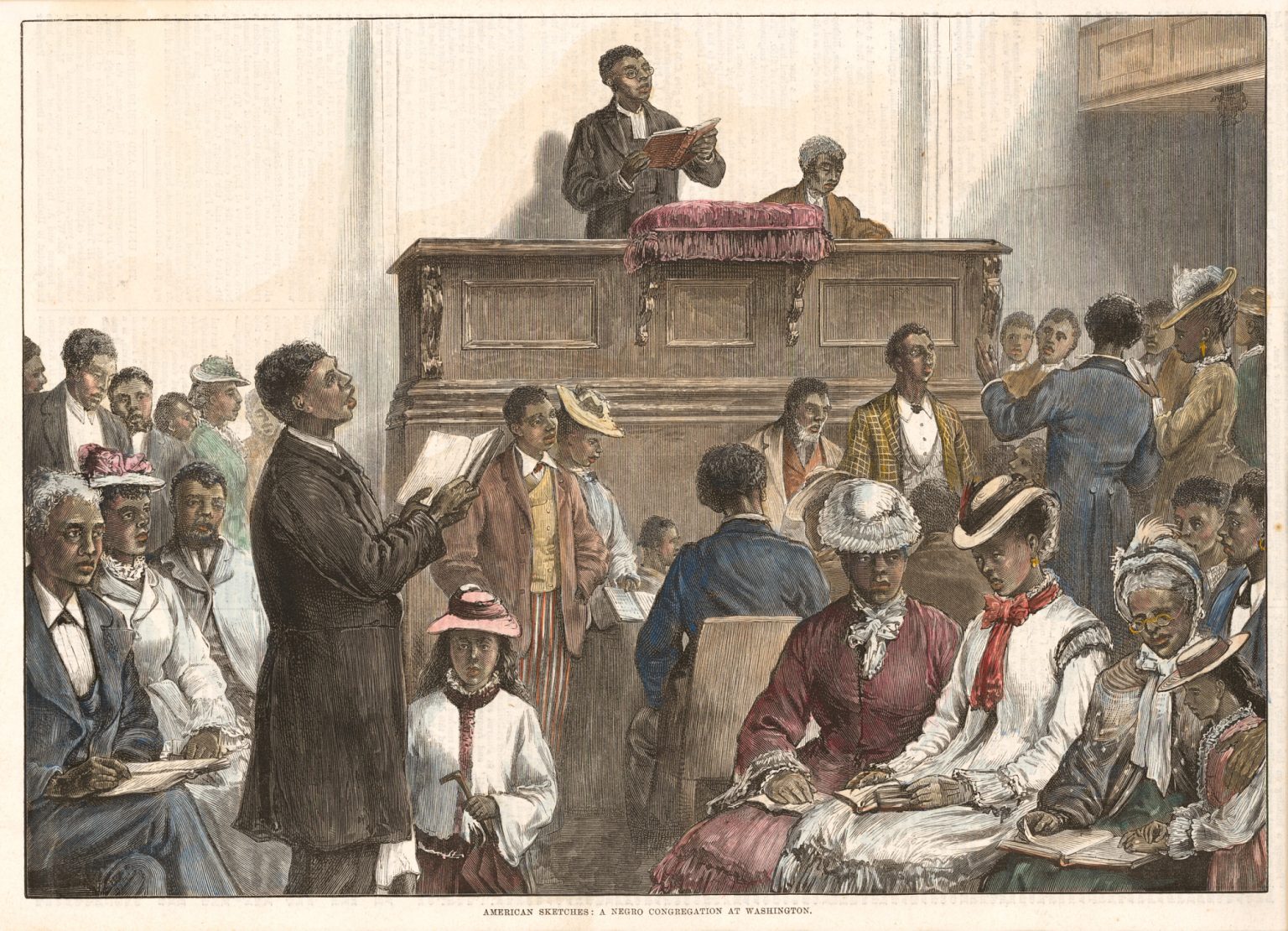
The period immediately following the American Civil War, known as Reconstruction (1865–1877), represents a foundational paradox in the history of African American political engagement. It was an era of unprecedented, federally-enforced progress that saw formerly enslaved people actively participate in the democratic process, achieving significant political power and socioeconomic gains. Simultaneously, this progress provoked a violent and systematic backlash that would ultimately dismantle the era’s achievements and define the subsequent century of struggle. For a brief, radical period, the power of the state was wielded to enforce the rights of its newest citizens, leading to a revolutionary, if tragically short-lived, transformation of the American political landscape.
The Constitutional and Legislative Foundation: The Promise of Federal Power
The political and social restructuring of the post-war South was driven by decisive federal action. A series of constitutional amendments and legislative acts provided the legal architecture for Black citizenship and suffrage. The Thirteenth Amendment (1865) abolished slavery, the Fourteenth Amendment (1868) established citizenship and equal protection under the law, and the Fifteenth Amendment (1870) explicitly prohibited the denial of the right to vote based on “race, color, or previous condition of servitude”. The Civil Rights Act of 1866, passed over the veto of President Andrew Johnson, further defined all persons born in the United States as national citizens entitled to equality before the law.
This legal framework was supported by a direct federal presence on the ground. The Bureau of Refugees, Freedmen, and Abandoned Lands, commonly known as the Freedmen’s Bureau, was established in 1865 to assist in the transition from slavery to freedom. With nearly a thousand offices across the South, the Bureau provided educational services, legal assistance, and social support, playing a critical role in helping Black communities build self-reliant institutions. The presence of federal troops and Freedmen’s Bureau officers was directly correlated with higher Black political engagement, greater access to education and property ownership, and improved socioeconomic outcomes that persisted for decades. This demonstrates that the gains of Reconstruction were not the result of an organic societal shift in the South but were almost entirely contingent on the active enforcement power of the federal government. The progress was a federally imposed restructuring, and its eventual collapse was a direct consequence of the withdrawal of that federal authority.
The Rise of the First Black Electorate and Officeholders
With the protection of federal law and the U.S. Army, newly enfranchised African American men enthusiastically embraced the political process. Throughout the South, they organized Equal Rights Leagues and held state and local conventions to protest discriminatory treatment and demand full suffrage and legal equality. The Black church, a long-standing pillar of the community, became a vital center for political mobilization, with religious leaders serving their communities well beyond the pews.
This groundswell of political activism translated into historic electoral success. Between the late 1860s and 1900, an estimated 2,000 African Americans held public office at every level of government. This included over 600 members of state legislatures and 265 delegates elected to the conventions tasked with rewriting Southern state constitutions. These new leaders, many of whom were ministers, skilled artisans, or Union Army veterans, pressed for the elimination of the racial caste system and policies aimed at the economic uplifting of the formerly enslaved population. Their emergence was not spontaneous but was nurtured within the foundational institutions of the Black community—the church and newly established schools—which provided the leadership skills, oratory, and organizational capacity necessary for political mobilization.
Pioneers in Congress: The Tenure of Senator Hiram Revels and His Contemporaries
The apex of this political ascent was the election of African Americans to the U.S. Congress. In total, 16 Black men served in Congress during Reconstruction, forever altering the composition of the nation’s highest legislative body.
Hiram Rhodes Revels: The first African American to serve in Congress was Hiram Rhodes Revels of Mississippi. Born to free parents in North Carolina in 1827, Revels was educated at a Quaker seminary and Knox College and was ordained as a minister in the African Methodist Episcopal (AME) Church. During the Civil War, he helped recruit two Black regiments for the Union Army and served as a chaplain. After the war, he settled in Natchez, Mississippi, where his work in education led him into politics. He was elected as a city alderman in 1868 and to the Mississippi State Senate in 1869.
In 1870, the Mississippi legislature elected Revels to fill the U.S. Senate seat that had been vacated by Jefferson Davis, the former president of the Confederacy. His seating on February 25, 1870, was a momentous event, overcoming fierce opposition from Southern Democrats who argued, based on the 1857
Dred Scott decision, that Revels had not been a citizen for the required nine years. During his year-long term, Revels became an outspoken opponent of racial segregation but also adopted a moderate political stance, advocating for the restoration of citizenship and amnesty for former Confederates who swore loyalty to the Union. After his Senate term, he continued his dedication to education as the first president of Alcorn University, the nation’s first public historically Black land-grant institution.
Other Trailblazers: Revels was joined by a cohort of other pioneering Black congressmen. Blanche K. Bruce, also of Mississippi, became the first African American to serve a full six-year term in the Senate (1875-1881). In the House of Representatives, Joseph H. Rainey of South Carolina became the first Black member in 1870, followed by others such as Benjamin S. Turner of Alabama and Jefferson Franklin Long of Georgia, who was the first African American to speak on the House floor.
The Systematic Dismantling of Power: White Supremacist Backlash and the End of Federal Protection
The rapid rise of Black political power provoked a ferocious and violent backlash from white Southerners determined to reestablish white supremacy. In response to federal civil rights legislation, Southern states enacted restrictive “Black Codes” designed to limit the economic options of freedmen and reestablish the discipline of the plantation system.
This legal opposition was coupled with organized terror. The Ku Klux Klan, founded in 1866, and other secret organizations used intimidation, violence, and murder to undermine Black political and economic power. They targeted Black officials, voters, and their white Republican allies, assassinating at least 35 Black officeholders during the era. The “laudable experiment in interracial democracy” was effectively ended with the political compromise of 1877, which resulted in the withdrawal of the last federal troops from the South. Without this federal protection, the gains of Reconstruction were systematically reversed, and the promises of the Fourteenth and Fifteenth Amendments would go largely unenforced for nearly a century.
II. The Great Suppression: Disenfranchisement and Political Exclusion in the Jim Crow Era (1877-1965)
The end of Reconstruction ushered in a nearly century-long period of political erasure for African Americans, particularly in the South. The key strategic shift during this era, known as the Jim Crow period, was the transition of voter suppression from a primarily extralegal activity based on terror to a state-sanctioned, legally codified system. This “architecture of disenfranchisement” was not a random collection of laws but a carefully constructed legal regime designed for the explicit purpose of racial exclusion, cloaked in the legitimacy of state law to make it more durable and difficult to challenge.
The Architecture of Disenfranchisement: A Legalistic Veneer for White Supremacy
With federal oversight removed, Southern states convened constitutional conventions and passed a raft of legislation with the chief goal of disenfranchising Black voters while circumventing the Fifteenth Amendment’s plain language. A battery of tactics was deployed, often in combination, to achieve this end:
- Poll Taxes: States imposed a fee as a prerequisite for voting, a significant barrier for impoverished Black sharecroppers and poor whites alike.
- Literacy Tests and “Understanding Clauses”: These measures required prospective voters to read and interpret sections of the state or federal constitution to the satisfaction of white registrars, who applied the tests with blatant racial bias. Even college-educated Black citizens were often failed, while illiterate whites were passed.
- Grandfather Clauses: To ensure that these restrictive measures did not disenfranchise poor and illiterate whites, states enacted clauses that exempted men from poll taxes or literacy tests if their grandfathers had been eligible to vote before 1867—a condition that only white men could meet.
- All-White Primaries: In the solidly Democratic South, winning the Democratic primary was tantamount to winning the general election. By declaring the Democratic Party a private club, states were able to legally restrict primary voting to whites only, effectively nullifying the Black vote in the only election that mattered.
- Gerrymandering: The practice of drawing electoral district lines to dilute the Black vote began as early as 1883 in Virginia, where city districts were reapportioned to minimize the impact of Black voters.
These legal mechanisms were brutally enforced by the constant threat of violence, intimidation, and economic reprisals from white supremacist groups and local law enforcement, ensuring that any attempt to challenge the system was met with severe consequences.
Quantifying the Erasure: The Decimation of the Black Electorate
The impact of these coordinated measures was swift, comprehensive, and catastrophic for Black political participation. The data reveals a near-total decimation of the Black electorate in just a few decades:
- In Mississippi, where approximately 70% of eligible Black men were registered to vote in 1867, registration plummeted to just 9,000 out of 147,000 eligible Black men—a mere 6%—by 1890. On the eve of the Voting Rights Act in 1964, the registration rate for Black citizens in Mississippi was still only 6.7%.
- In Louisiana, where African Americans constituted 44% of registered voters after the Civil War, the number of Black registered voters fell from 130,000 to just 1,342 by 1920, reducing their share of the electorate to a negligible 1%.
- Across Alabama in early 1965, only 19.4% of the state’s eligible African American population was registered to vote. In Dallas County, a majority-Black county that would become the epicenter of the voting rights movement, a mere 156 of 15,000 voting-eligible African Americans were on the rolls.
This systematic exclusion from the ballot box resulted in the loss of nearly all Black elected officials. Between 1870 and 1901, 22 African Americans had served in Congress; after 1901, there would not be another Black congressman from the South for over 70 years.
The Legal Battleground: The NAACP’s Long Campaign Against Voter Suppression
In the face of this overwhelming system of suppression, organized resistance began to form. The National Association for the Advancement of Colored People (NAACP), an interracial organization founded in 1909 in response to rampant lynching and racial violence, became the primary legal advocate for Black civil rights.
The NAACP’s strategy focused on challenging the constitutionality of Jim Crow laws in federal court. This long, painstaking campaign yielded several crucial, if incremental, victories:
- In Guinn v. United States (1915), the NAACP successfully argued before the Supreme Court that grandfather clauses were unconstitutional.
- In Smith v. Allwright (1944), the Court outlawed the all-white primary, ruling that political parties were not private clubs and must adhere to the Fifteenth Amendment.
- The NAACP also spearheaded a 30-year legislative campaign against lynching. While a federal anti-lynching bill never passed Congress during this period, the sustained public pressure and awareness generated by the campaign is widely credited with a drastic decrease in the practice.
These legal triumphs were heroic and essential, yet they underscored the limitations of a purely judicial strategy against a multifaceted system of oppression. Each time a court struck down one discriminatory device, Southern states would simply erect a new one in its place. The abysmal voter registration numbers in the 1960s, decades after these legal victories, proved that the overall system of disenfranchisement remained firmly intact. This reality suggested that a systemic problem required a systemic solution; the courts could chip away at the edifice of Jim Crow, but only comprehensive federal legislation could fully dismantle it.
III. The Second Reconstruction: The Civil Rights Movement and the Re-Enfranchisement of Black America
The mid-20th century marked a monumental shift in the struggle for Black political rights, culminating in what is often termed a “Second Reconstruction.” Like the first, this era was defined by massive federal intervention required to override state-level denial of constitutional rights. The centerpiece of this transformation was the Voting Rights Act of 1965, a landmark piece of legislation that re-enfranchised millions of African Americans and paved the way for the institutionalization of Black political power on a national scale.
The Voting Rights Act of 1965: A Turning Point in American Democracy
Signed into law by President Lyndon B. Johnson on August 6, 1965, the Voting Rights Act (VRA) is widely considered the most effective piece of civil rights legislation in U.S. history. The Act was a direct legislative response to the national outrage sparked by the violent suppression of peaceful voting rights activists, most notably the “Bloody Sunday” attack on marchers in Selma, Alabama, which was broadcast on national television.
The VRA’s power lay in its comprehensive and forceful provisions, which represented a fundamental shift in the balance of power between the federal government and the states on voting rights. It was a direct repudiation of the “states’ rights” arguments that had shielded Jim Crow for nearly a century. Key provisions included:
- A nationwide prohibition on discriminatory voting practices, including the immediate ban of literacy tests and similar devices that had been used for decades to disenfranchise minority voters.
- The authorization for federal examiners to be sent to jurisdictions to oversee voter registration and ensure that eligible citizens were not denied the right to vote.
- The creation of a “preclearance” mechanism under Section 5. This was the VRA’s most potent tool. It required states and localities with a documented history of voting discrimination (as determined by a “coverage formula”) to obtain approval, or preclearance, from the U.S. Department of Justice or a federal court before implementing any new voting laws or procedures. This provision proactively blocked discriminatory laws before they could take effect, shifting the burden of proof from the victims of discrimination to the states themselves.
The impact of the VRA was immediate and profound, as demonstrated by the dramatic increase in voter registration across the South.
| State | % Black Voter Registration (Pre-1965) | % White Voter Registration (Pre-1965) | Registration Gap (Pre-1965) | % Black Voter Registration (Post-1965, approx. 1969) | |
| Alabama | 19.4% | 69.2% | 49.8 pts | 51.6% | |
| Georgia | 27.4% | 62.6% | 35.2 pts | 60.4% | |
| Louisiana | 31.6% | 80.5% | 48.9 pts | 60.8% | |
| Mississippi | 6.7% | 70.2% | 63.5 pts | 59.8% | |
| North Carolina | 46.8% | 96.8% | 50.0 pts | 51.3% | |
| South Carolina | 37.3% | 75.7% | 38.4 pts | 51.2% | |
| Virginia | 38.3% | 61.1% | 22.8 pts | 55.6% | |
| Data compiled from multiple sources detailing registration rates before and after the VRA’s passage. |
As the table illustrates, the VRA dismantled the legal barriers to voting with stunning efficiency. In Mississippi, the state with the most severe record of suppression, Black voter registration surged from less than 7% to nearly 60% in just four years. By the end of 1965 alone, a quarter of a million new Black voters had been registered across the South. The overall registration gap between Black and white voters in the former Confederate states, which stood at nearly 30 percentage points in the early 1960s, shrank to just 8 percentage points within a decade.
The Emergence of Institutional Power: The Congressional Black Caucus (CBC)
The re-enfranchisement of millions of Black voters led directly to a surge in the number of Black elected officials, from local school boards to the U.S. Congress. This growing contingent of lawmakers recognized the need to translate their electoral numbers into coordinated institutional power. In 1969, the nine Black members of the House of Representatives formed the Democratic Select Committee to facilitate communication. By 1971, with their numbers having grown to 13, they formally established the Congressional Black Caucus (CBC).
The CBC’s founding members, including pioneers like Shirley Chisholm of New York, William Lacy Clay Sr. of Missouri, and Charles Rangel of New York, envisioned a non-partisan body that would serve as the “conscience of the Congress” and a unified legislative voice for African Americans and other marginalized communities. The Caucus quickly established its national influence by boycotting President Richard Nixon’s 1971 State of the Union Address after he refused to meet with them. The public pressure generated by the boycott worked, and Nixon subsequently met with the CBC, where they presented him with a list of 61 recommendations to address racial inequality. This act demonstrated a conscious strategy to wield collective power for national influence. Over the decades, the CBC has been instrumental in shaping policy on voting rights, criminal justice reform, economic opportunity, and foreign affairs, successfully leading the legislative efforts to establish a national holiday for Martin Luther King Jr. and to pass the Comprehensive Anti-Apartheid Act of 1986 against South Africa. The formation of the CBC was a crucial step in institutionalizing Black political power, ensuring that electoral gains could be translated into a sustained and coherent policy agenda.
A Partisan Realignment: The Black Electorate and the Democratic Party
The Civil Rights era also cemented a profound realignment in American party politics. For nearly a century after the Civil War, African Americans had been overwhelmingly loyal to the Republican Party, the party of Abraham Lincoln and Emancipation. This began to change during the 1930s with President Franklin D. Roosevelt’s New Deal, which provided critical economic aid to Black communities disproportionately harmed by the Great Depression.
The shift accelerated and became permanent during the 1960s. As the national Democratic Party, led by Presidents John F. Kennedy and Lyndon B. Johnson, championed landmark legislation like the Civil Rights Act of 1964 and the Voting Rights Act of 1965, the Republican Party began to adopt a “Southern Strategy” that appealed to white voters resentful of these changes. Since then, African Americans have become the most loyal and consistent voting bloc within the Democratic Party, frequently described as its “unwavering backbone”.
IV. Breaking the Highest Barriers: Profiles in Modern Leadership
The decades following the Civil Rights Movement saw African American politicians move from the margins of power to its absolute center. The careers of Shirley Chisholm, Barack Obama, and Kamala Harris illustrate a remarkable evolution in the pathways to national office, culminating in the breaking of the highest barriers in American politics. Their trajectories reveal a shift from symbolic representation and legislative influence to the wielding of direct executive authority over the nation.
“Unbought and Unbossed”: The Trailblazing Career and Presidential Campaign of Shirley Chisholm
Shirley Chisholm’s political career was a testament to her motto: “Unbought and Unbossed”. An educator and expert in early childhood education, she began her political journey in the New York State Legislature in 1964. In 1968, she shattered a significant barrier by becoming the first African American woman elected to the United States Congress. She was acutely aware of the obstacles she faced, acknowledging that she had a “double handicap” as both Black and female.
During her seven terms in the House of Representatives (1969-1983), Chisholm was a relentless and effective advocate for her constituents and for marginalized communities nationwide. As a founding member of both the Congressional Black Caucus and the National Women’s Political Caucus, she championed racial and gender equality, anti-poverty programs, and an end to the Vietnam War. Her legislative victories were tangible: she was instrumental in the expansion of the food stamp program, the creation of the Special Supplemental Nutrition Program for Women, Infants, and Children (WIC), and the passage of a bill to extend minimum wage coverage to domestic workers for the first time.
In 1972, Chisholm made a historic bid for the presidency, becoming the first Black candidate of a major party and the first woman to seek the Democratic Party’s nomination. Facing an underfunded campaign and exclusion from televised primary debates, she nonetheless entered 12 primaries and garnered 152 delegate votes at the Democratic National Convention. Her campaign was not about winning, but about forcing the political establishment to address the issues of importance to women and minorities, paving the way for those who would follow.
“A More Perfect Union”: The Political Trajectory and Presidency of Barack Obama
Barack Obama’s path to the presidency represented a hybrid of grassroots activism and elite institutional ascension. His career began as a community organizer on the South Side of Chicago before he attended Harvard Law School, where he gained national attention as the first African American president of the prestigious Harvard Law Review. After law school, he served as a civil rights attorney and taught constitutional law before being elected to the Illinois Senate in 1996 and the U.S. Senate in 2004. In 2008, he achieved a feat once thought impossible, winning the presidency to become the 44th President of the United States and the first African American to hold the office.
Obama’s two-term presidency (2009-2017) was defined by the formidable challenges he inherited—a global financial crisis and two ongoing wars—and the landmark legislation he enacted.
- Domestic Policy: His signature domestic achievement was the Patient Protection and Affordable Care Act (ACA), a sweeping reform of the American healthcare system. In response to the Great Recession, he signed the American Recovery and Reinvestment Act, a massive economic stimulus package, and the Dodd-Frank Wall Street Reform and Consumer Protection Act to regulate the financial industry. His administration also championed the Lilly Ledbetter Fair Pay Act to combat wage discrimination and oversaw the repeal of “Don’t Ask, Don’t Tell,” allowing gay and lesbian Americans to serve openly in the military.
- Foreign Policy: Obama ended U.S. military involvement in the Iraq War, authorized the special operations raid that killed al-Qaeda leader Osama bin Laden, and negotiated the New START treaty with Russia to reduce nuclear arsenals. He also led the international efforts that resulted in the 2015 Paris Agreement on climate change and the Joint Comprehensive Plan of Action, a nuclear agreement with Iran.
“For the People”: The Ascendancy and Vice Presidency of Kamala Harris
Kamala Harris’s career illustrates a more traditional, institutional pathway to national power, built through the legal and executive ranks. She served as District Attorney of San Francisco (2004-2011) and was later elected Attorney General of California (2010-2017), becoming the first woman and first African American to hold the office. As Attorney General, she secured a $20 billion settlement for California homeowners affected by the foreclosure crisis and defended the Affordable Care Act in court.
In 2017, Harris was sworn in as a U.S. Senator for California, only the second Black woman in the Senate’s history. In 2020, she was elected Vice President on the ticket with Joe Biden, making history as the first woman, the first African American, and the first South Asian American to hold the office. As Vice President, Harris has played a key role in the administration’s agenda, focusing on voting rights, reproductive freedom, and gun violence prevention, and overseeing the first-ever White House Office of Gun Violence Prevention. As President of the Senate in an evenly divided chamber, she cast a record number of tie-breaking votes, including the decisive vote to pass the Inflation Reduction Act, the largest climate investment in U.S. history. She also presided over the historic confirmation of Justice Ketanji Brown Jackson as the first Black woman to serve on the U.S. Supreme Court.
The progression from Chisholm’s activist platform to Obama’s executive leadership and Harris’s vice presidency demonstrates a maturation of Black political power. It has evolved from being a voice of conscience within the legislature to holding the levers of executive power that direct the state.
V. The Modern Battleground: Contemporary Challenges to Black Political Power
Following the historic achievements of the 21st century, the struggle for African American political equality has entered a new and complex phase. A modern backlash has emerged, characterized not by the overt, violent suppression of the Jim Crow era, but by the legal and procedural erosion of voting rights and the strategic dilution of the Black vote. This new battleground is defined by Supreme Court decisions that weaken federal protections and a proliferation of state-level laws that create systemic barriers to participation.
The Erosion of Federal Protections: The Impact of Shelby County v. Holder
A critical turning point in this modern era was the Supreme Court’s 2013 decision in Shelby County v. Holder. In this ruling, the Court effectively neutralized Section 5 of the Voting Rights Act—its most powerful provision—by striking down the “coverage formula” that determined which states and localities with a history of discrimination were subject to federal preclearance.
This decision represented a fundamental doctrinal shift away from the proactive federal protection that had defined the VRA. For nearly 50 years, the preclearance requirement had placed the burden on states to prove their voting changes were not discriminatory before they went into effect. The Shelby County ruling dismantled this preventative structure, forcing civil rights advocates to return to a reactive, litigation-based model: challenging discriminatory laws in court only after they have been passed and have potentially affected an election. This shift places an enormous financial and logistical burden back onto the victims of discrimination.
The consequences were immediate and widespread. Freed from federal oversight, states across the country—particularly those formerly covered by Section 5—unleashed a wave of new, restrictive voting laws. Subsequent analysis has shown that the gap in voter turnout between white and Black Americans, which had been narrowing for decades, has consistently grown since 2012 and is widening most rapidly in those jurisdictions that were previously subject to federal preclearance.
The New Tools of Suppression: A Multi-Pronged Assault on Ballot Access
Modern voter suppression relies on a variety of tactics that, while often race-neutral on their face, have a demonstrably disproportionate impact on African American and other minority voters who are more likely to be low-income, have less flexible work schedules, and face greater transportation challenges.
| Tactic | Description | Disproportionate Impact on Black Voters | |
| Strict Voter ID Laws | Requires voters to present specific forms of government-issued photo ID, which may be difficult or costly to obtain. | Black citizens are less likely to possess the required forms of ID. A Texas law was struck down for accepting gun licenses but not student IDs, a distinction that favored white voters. | |
| Polling Place Closures | The mass closure of polling locations, often concentrated in minority neighborhoods, under the guise of budget cuts or a shift to “vote centers.” | Leads to longer lines and greater travel distances, which disproportionately burden voters in Black communities. In 2020, voters in all-Black neighborhoods were 74% more likely to wait over 30 minutes to vote. | |
| Voter Roll Purges | Aggressive and often inaccurate removal of voters from registration lists for reasons such as inactivity or a change of address. | Purges based on flawed data can improperly remove thousands of eligible voters, often concentrated in minority communities, without their knowledge. | |
| Cuts to Early Voting | Reducing the number of early voting days, eliminating Sunday voting (“Souls to the Polls”), or closing early voting locations. | Black voters utilize early voting, particularly on Sundays, at higher rates than white voters. Cuts directly target a preferred method of voting for the Black community. | |
| Felony Disenfranchisement | Laws that permanently or temporarily strip voting rights from citizens with felony convictions. | Due to racial disparities in the criminal justice system, these laws have an outsized impact on the Black community. Nationally, 7.7% of Black adults are disenfranchised, a rate nearly four times that of non-Black adults. | |
| Restrictions on Absentee Voting | Imposing stricter witness or signature-matching requirements and limiting the use of ballot drop boxes. | Black voters’ mail-in ballots are rejected at significantly higher rates than those of white voters, often for minor technical errors. | |
| Data compiled from multiple sources detailing modern voter suppression tactics. |
The Power of the Pen: How Racial and Partisan Gerrymandering Dilutes the Black Vote
Beyond direct barriers to casting a ballot, the drawing of legislative district maps—a process known as gerrymandering—is used to dilute the political power of Black communities. Using sophisticated mapping software, legislators can surgically draw district lines to ensure partisan outcomes. Two primary techniques are used to diminish the Black vote:
- “Cracking”: This method splits a cohesive Black community across several districts, ensuring that Black voters are a minority in each one and thus unable to elect their candidate of choice.
- “Packing”: This tactic concentrates as many Black voters as possible into a single, overwhelmingly Democratic district. While this may guarantee the election of a Black representative in that one district, it “bleaches” the surrounding districts, weakening Black influence and making it easier for the opposing party to win elsewhere.
Because African American voters are a highly reliable Democratic bloc, partisan gerrymandering by Republican-controlled legislatures often has a direct and predictable racial impact. This practice is frequently defended in court as being motivated by partisanship, not race. However, given the strong correlation between race and party affiliation, this distinction often serves as a legal shield for actions that achieve a clear racial outcome, making it a central and difficult challenge in the fight for fair representation.
Persistent Representation Gaps: Analyzing the Deficit
Despite historic gains at the highest levels of government, significant representation gaps persist, particularly at the state and local levels. While the U.S. House of Representatives has achieved near-parity, with Black members making up 13% of the body compared to a 12.5% share of the citizen voting-age population, other branches of government lag far behind.
- U.S. Senate: African Americans hold only 2% of seats in the Senate.
- State Legislatures: Black officials hold only 8.5% of seats in state legislatures nationwide.
- Governorships: No Black woman has ever served as a U.S. governor, and only three Black men have been elected to the office in the nation’s history.
- City Councils: African Americans hold just 5.7% of city council seats across the country.
These gaps are the direct result of the systemic barriers to voting and the dilutive effects of gerrymandering, which combine to ensure that the growing political engagement of the Black community does not fully translate into commensurate political power.
VI. The State of Black Political Influence and the Path Forward
The contemporary landscape of African American politics is defined by a striking paradox: Black political influence is at a historic peak, yet it faces the most systematic and widespread threats since the Jim Crow era. The Black electorate stands as a decisive force in national elections, and Black leaders hold some of the highest offices in the land. This very influence, however, has provoked a powerful and strategic counter-movement aimed at curtailing voting rights and diluting Black political power. The ongoing struggle has therefore shifted from primarily seeking a seat at the table to preventing the table itself from being dismantled.
Key Policy Imperatives: The Modern Agenda
Reflecting a maturation of political power, the policy agenda of major Black political organizations and leaders has evolved. While the protection of foundational civil rights remains paramount, the focus has broadened to address the deep-seated systemic inequalities that are the legacy of centuries of discrimination. The agenda has moved from demanding access to the system to demanding that the system itself produce equitable outcomes. Key priorities include:
- Race and Justice: At the forefront is the fight against modern voter suppression and the push for federal voting rights protections, such as the John Lewis Voting Rights Advancement Act. This is coupled with a demand for comprehensive criminal justice reform, including police accountability and an end to racial profiling.
- Economic Justice: A central goal is to tackle the persistent racial wealth gap, where the median wealth of white households is more than six times that of Black households. Policy proposals include addressing discrimination in housing and lending, ensuring equitable tax policies, raising the minimum wage, and increasing access to capital for Black-owned businesses.
- Health and Well-being: There is a major focus on eliminating racial health disparities, which manifest in issues like the disproportionate impact of environmental pollution on Black communities and the alarmingly high rates of Black maternal mortality. Advocating for reproductive justice and equitable access to quality, affordable healthcare are core tenets of this agenda.
- Education: Leaders are focused on securing robust federal funding for Historically Black Colleges and Universities (HBCUs) and combating recent efforts to censor curricula and restrict the teaching of Black history and topics related to race and inequality in public schools.
Emerging Leaders and the Future Trajectory of Black Politics
Despite the formidable challenges, Black political representation has reached an all-time high, with over 10,000 Black elected officials serving at all levels of government across the United States. A new and diverse generation of leaders is ascending, building on the legacy of those who came before them.
- At the state executive level, Wes Moore of Maryland is only the third Black person ever elected governor in U.S. history.
- In the U.S. Senate, a record five African Americans are currently serving: Angela Alsobrooks (D-MD), Lisa Blunt Rochester (D-DE), Raphael Warnock (D-GA), Cory Booker (D-NJ), and Tim Scott (R-SC).
- In major cities, Black mayors are leading some of the nation’s largest urban centers, including Cherelle Parker in Philadelphia and mayors in New York, Los Angeles, and Chicago.
- New voices continue to emerge, such as Gabe Amo, the first Black congressman from Rhode Island, and Yusef Salaam, a member of the exonerated “Central Park Five” who was elected to the New York City Council, symbolizing a powerful narrative of justice and political empowerment.
The future of Black political power will depend on nurturing this pipeline of leadership, mobilizing the Black electorate, which remains a cornerstone of the Democratic party’s coalition, and building broad, cross-racial alliances to address shared socioeconomic challenges.
Conclusion: The Enduring Struggle for Full Political Equality
The history of African Americans in United States politics is a profound narrative of resilience, defined by a recurring cycle: significant, hard-won gains achieved through immense struggle and critical federal intervention, followed by fierce and adaptive backlash aimed at retracting those gains. From the promise of Reconstruction and its violent overthrow to the triumph of the Voting Rights Act and its subsequent judicial erosion, the central conflict has remained constant: the struggle to make the constitutional promises of citizenship and suffrage a lived reality for all Americans.
Today, Black Americans hold unprecedented power as voters and as elected officials, yet that power is contested with a new intensity and sophistication. The unfinished journey toward full political equality continues, and its success will depend not only on electing more Black officials but on the broader, collective fight to protect democratic institutions, dismantle systemic racism, and build a “more perfect union” where the right to vote and the power of representation are truly secure for every citizen.

